
2026 US Tariff Guide: Section 301, 232 & What's Changed
April 23, 2026
2026 US Tariff Guide: Section 301, 232 & What's Changed
The tariff landscape facing US importers in 2026 looks dramatically different than it did even twelve months ago. Between expanded Section 301 duties on Chinese-origin goods, revised Section 232 measures on steel and aluminum derivatives, and a patchwork of reciprocal tariffs introduced throughout 2025, the cost of importing from China has reached historic highs. For companies still sourcing plastic components, injection-molded parts, or finished goods from Chinese factories, the math has fundamentally changed.
We at Reshore work with US brands every week who are recalculating their landed costs and, in many cases, discovering that tariffs alone now erase the labor arbitrage that once justified China production. This guide walks through where US tariffs stand in 2026, what's changed, and what it means if you're importing plastics or consumer goods.
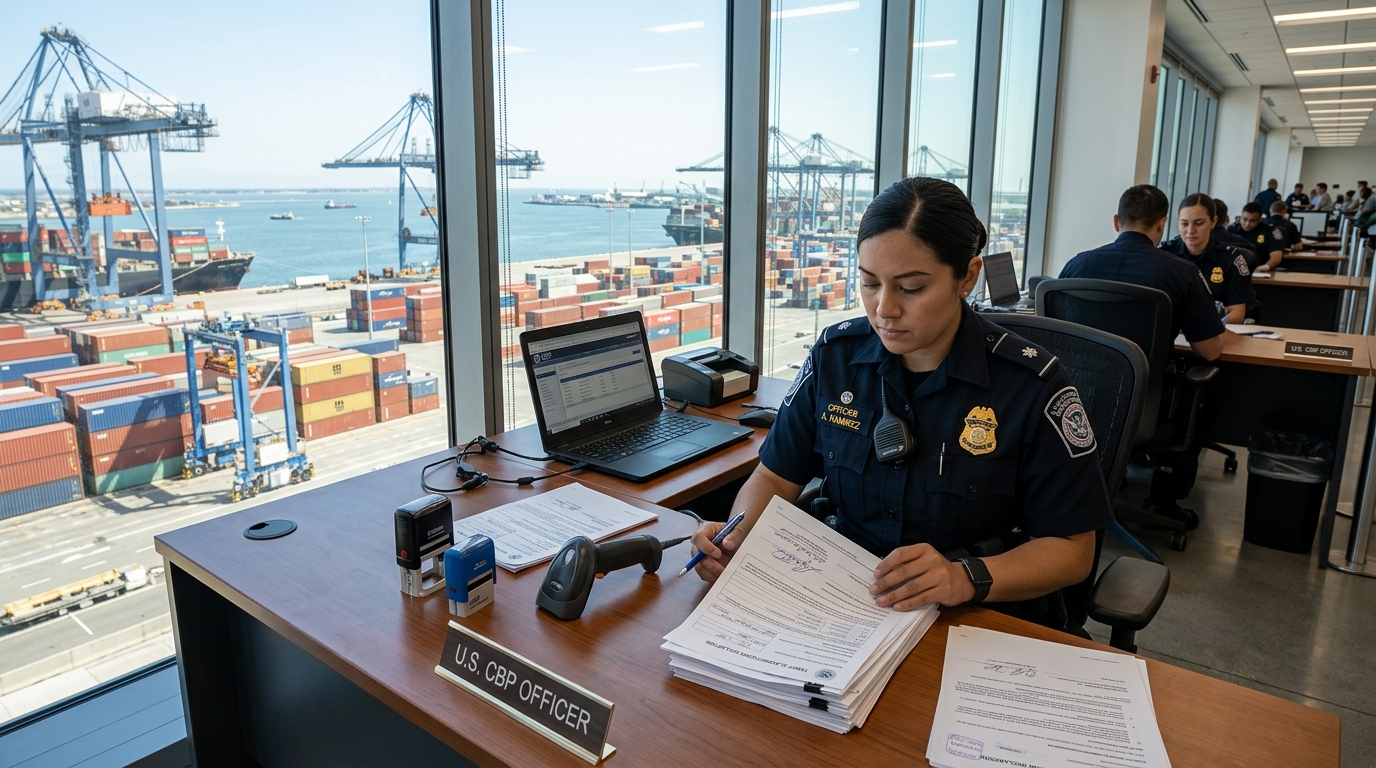
The State of US Tariffs in 2026
As of April 2026, the effective tariff rate on many categories of Chinese-origin imports sits between 35% and 85%, depending on the Harmonized Tariff Schedule (HTS) classification. This is the cumulative result of layered actions:
- Section 301 tariffs (originally imposed in 2018) were expanded in 2024 and again in mid-2025.
- Section 232 tariffs on steel, aluminum, and their derivative products were broadened in 2025 to cover more downstream goods.
- Reciprocal tariffs under executive action in 2025 added blanket duties on imports from specific trading partners, with China facing the highest rates.
- IEEPA-based tariffs tied to fentanyl precursors and supply chain security added additional duties on top of existing Section 301 rates.
For plastic products, housewares, electronics enclosures, medical device components, and most injection-molded goods, the combined effect often exceeds 50% of declared value.
Section 301 Tariffs: The Core China Duty
Section 301 of the Trade Act of 1974 authorizes the US Trade Representative (USTR) to impose tariffs in response to unfair trade practices. The action targeting China has been the most consequential trade measure in a generation.
What Changed in 2025–2026
The USTR's four-year review, finalized in 2024, set the stage for aggressive hikes that took effect in phases. By 2026, rates that began at 7.5%–25% have climbed significantly:
| Product Category | 2024 Section 301 Rate | 2026 Section 301 Rate |
|---|---|---|
| Electric vehicles | 25% | 100% |
| Lithium-ion EV batteries | 7.5% | 25% |
| Semiconductors | 25% | 50% |
| Solar cells | 25% | 50% |
| Steel and aluminum | 7.5% | 25% |
| Medical gloves (non-latex) | 7.5% | 50% |
| Syringes and needles | 0% | 50% |
| Ship-to-shore cranes | 0% | 25% |
| Plastic injection-molded parts (various HTS) | 25% | 25%–35% + layered duties |
These rates stack on top of the base Most-Favored-Nation (MFN) duty that applies to all imports. Official rate schedules are maintained by the USTR and the US International Trade Commission.
List 1 Through List 4A — and Beyond
The original Section 301 action was broken into four lists covering roughly $370 billion of Chinese imports. In 2025, USTR added new categories and raised existing rates, meaning almost any company importing from China is now exposed regardless of which list their product originally fell under.
Section 232: Steel, Aluminum, and Derivatives
Section 232 of the Trade Expansion Act of 1962 allows tariffs on imports that threaten national security. The 2018 steel (25%) and aluminum (10%) tariffs remained largely in place through 2024, but 2025 brought major expansion:
- Aluminum tariff raised to 25%, matching steel.
- Derivative product coverage expanded to include finished goods containing meaningful steel or aluminum content — screws, fasteners, appliance parts, cable trays, and many hardware items.
- Country exemptions tightened, with prior carve-outs for several trading partners removed or converted to tariff-rate quotas.
For plastic products, Section 232 matters because many assemblies contain metal inserts, hinges, fasteners, or mounting hardware. Importers need to examine bills of materials closely to avoid surprise duties at customs.
Import Duties 2026: How They Stack
Understanding your true landed cost in 2026 requires adding multiple tariff layers. For a Chinese-origin plastic consumer product, a typical calculation might look like:
| Component | Rate |
|---|---|
| MFN base duty (varies by HTS) | 3.4% |
| Section 301 (List 3) | 25% |
| IEEPA China tariff | 20% |
| Reciprocal tariff adjustment | 10% |
| Total effective tariff | ~58% |
On a $100,000 shipment, that's $58,000 in duties before freight, brokerage, and Merchandise Processing Fees. This is why so many of our clients are rerunning their cost models — and why the Tariff Impact Calculator we built has become one of the most-used tools on our platform.
The USMCA Advantage
While Chinese tariffs have risen, the United States-Mexico-Canada Agreement (USMCA) continues to provide duty-free treatment for qualifying goods manufactured in Mexico or Canada. For plastic parts, injection-molded components, and most consumer goods, meeting USMCA rules of origin means 0% tariff entry into the US.
This is the single largest reason manufacturing migration to Mexico accelerated through 2025 and into 2026. A product that costs 58% in tariffs from Shenzhen can cost 0% in tariffs from Monterrey — assuming it qualifies under USMCA's regional value content rules.
Reshore's platform focuses heavily on this arbitrage. Our nearshoring guide for Mexico covers qualification mechanics in depth, but the short version: if your product's components are substantially transformed in Mexico and meet regional content thresholds, you likely avoid tariffs entirely.
What's Changed: A Quick Timeline
- Q2 2024: USTR announces Section 301 rate hikes following four-year review.
- Q3 2024: First tranche of increases take effect (EVs, batteries, solar).
- Q1 2025: Executive order imposes IEEPA tariffs on Chinese imports citing fentanyl precursors.
- Q2 2025: Section 232 aluminum rate raised to 25%; derivative coverage expanded.
- Q3 2025: Reciprocal tariff framework introduced; China faces highest rates.
- Q4 2025: Second round of Section 301 increases on medical, semiconductor, and shipbuilding categories.
- Q1 2026: USTR publishes updated exclusion process; most exclusions from 2022 expire without renewal.
Exclusion Process: Narrower Than Ever
Section 301 exclusions — product-specific exemptions — were once a common relief valve for importers. In 2026, the exclusion landscape is much tighter:
- The 2022 machinery exclusions largely expired.
- New exclusion requests require documentation of US or third-country sourcing unavailability.
- Approval rates have dropped below 15% based on published USTR data.
For most importers, waiting on an exclusion is not a viable strategy. Relocating production is.
What This Means for Plastics Manufacturers
Plastic product importers face some of the steepest cumulative tariffs in 2026. A typical injection-molded consumer product — a kitchen tool, cosmetic case, electronic enclosure, or medical device component — imported from China now carries 35%–65% in combined duties.
Three responses we see companies taking:
- China+1 diversification: Adding a second-source supplier in Vietnam, Thailand, or India. This reduces concentration risk but doesn't eliminate tariff exposure, and several Southeast Asian countries now face their own reciprocal tariffs.
- Full reshoring to the US: Bringing production back domestically using US contract manufacturers. Highest cost, highest supply chain security, eligible for various state-level reshoring incentives.
- Nearshoring to Mexico: Relocating tooling to Mexican injection molders. Preserves most cost advantages, achieves 0% tariff under USMCA, and keeps production within a two-day drive of most US distribution centers.
Reshore's core focus is #3 — coordinating tooling transfer, supplier matching, and production setup in Mexico. We've found it's the sweet spot for most plastic manufacturers: the unit economics hold, tariffs disappear, and lead times shrink from 45+ days of ocean freight to 3–5 days of trucking.
Practical Next Steps
If you're importing from China in 2026 and haven't reassessed your tariff exposure in the last six months, you're likely operating on outdated numbers. We recommend:
- Pull your last 12 months of entries from your customs broker and identify HTS codes with the highest tariff impact.
- Model landed cost scenarios for US, Mexico, and China production for your top SKUs.
- Audit your tooling portability — can your molds be moved, or do they need to be rebuilt?
- Evaluate supplier alternatives in USMCA jurisdictions.
Companies that started this process in 2024 are reaping significant cost advantages today. Those starting now in Q2 2026 can still realize tariff savings within 6–9 months if they move with discipline.
Frequently Asked Questions
Q: What is the current Section 301 tariff rate on Chinese imports in 2026?
Section 301 rates in 2026 range from 7.5% to 100% depending on product category, with most plastic and consumer goods in the 25%–35% range. These rates stack on top of MFN base duties and additional IEEPA or reciprocal tariffs, making effective total tariffs on many Chinese imports exceed 50%.
Q: How do I find out which tariffs apply to my product?
Start with your product's 10-digit HTS code, which you can look up through the US International Trade Commission's HTS database. Once you have the code, check the base MFN rate, then cross-reference USTR's Section 301 list, any applicable Section 232 coverage, and current IEEPA and reciprocal tariff orders. A licensed customs broker can validate the full stack.
Q: Are there exemptions from the 2026 China tariffs?
The USTR maintains a narrow exclusion process, but approval rates are low and most 2022-era exclusions have expired. Some goods imported for specific national security, medical, or research purposes may qualify, but for typical commercial imports, exclusions should not be counted on as a viable cost-mitigation strategy.
Q: Does moving production to Mexico actually avoid US tariffs?
Yes, when products qualify under USMCA rules of origin. This generally requires meaningful transformation in Mexico and meeting regional value content thresholds specific to your product category. Qualifying goods enter the US duty-free, which is why Mexico has become the dominant reshoring destination for tariff-sensitive categories.
Q: What's the difference between Section 301 and Section 232 tariffs?
Section 301 targets unfair trade practices — enacted against China in 2018 and expanded multiple times since, it covers most Chinese-manufactured goods with tariffs of 7.5–25% on top of base MFN rates. Section 232 targets national security concerns — it applies to steel and aluminum imports from multiple countries and adds 25% on steel and 10% on aluminum. The two can stack: a Chinese steel-intensive component may face both levies simultaneously, pushing effective tariff rates above 50%. Accurate HTS classification determines which tariffs apply — work with a licensed customs broker or trade attorney to classify your goods correctly before modeling your exit cost.
Ready to get started? Request a reshoring assessment or run a cost comparison — we’ll respond within one business day.