
Automotive Plastic Parts: Nearshore Manufacturing Directory
April 23, 2026
Automotive Plastic Parts: Nearshore Manufacturing Directory
The automotive industry's shift toward nearshore manufacturing has accelerated dramatically, with Mexico emerging as the premier destination for automotive plastic parts production. As supply chain disruptions and rising costs in Asia continue to challenge manufacturers, US automotive companies are increasingly turning to Mexico's robust manufacturing ecosystem for their plastic component needs.
This comprehensive directory provides essential information about Mexico's automotive plastic manufacturing landscape, helping companies navigate the transition from overseas to nearshore production. Whether you're looking to relocate existing operations or establish new manufacturing partnerships, understanding Mexico's capabilities and advantages is crucial for making informed decisions.
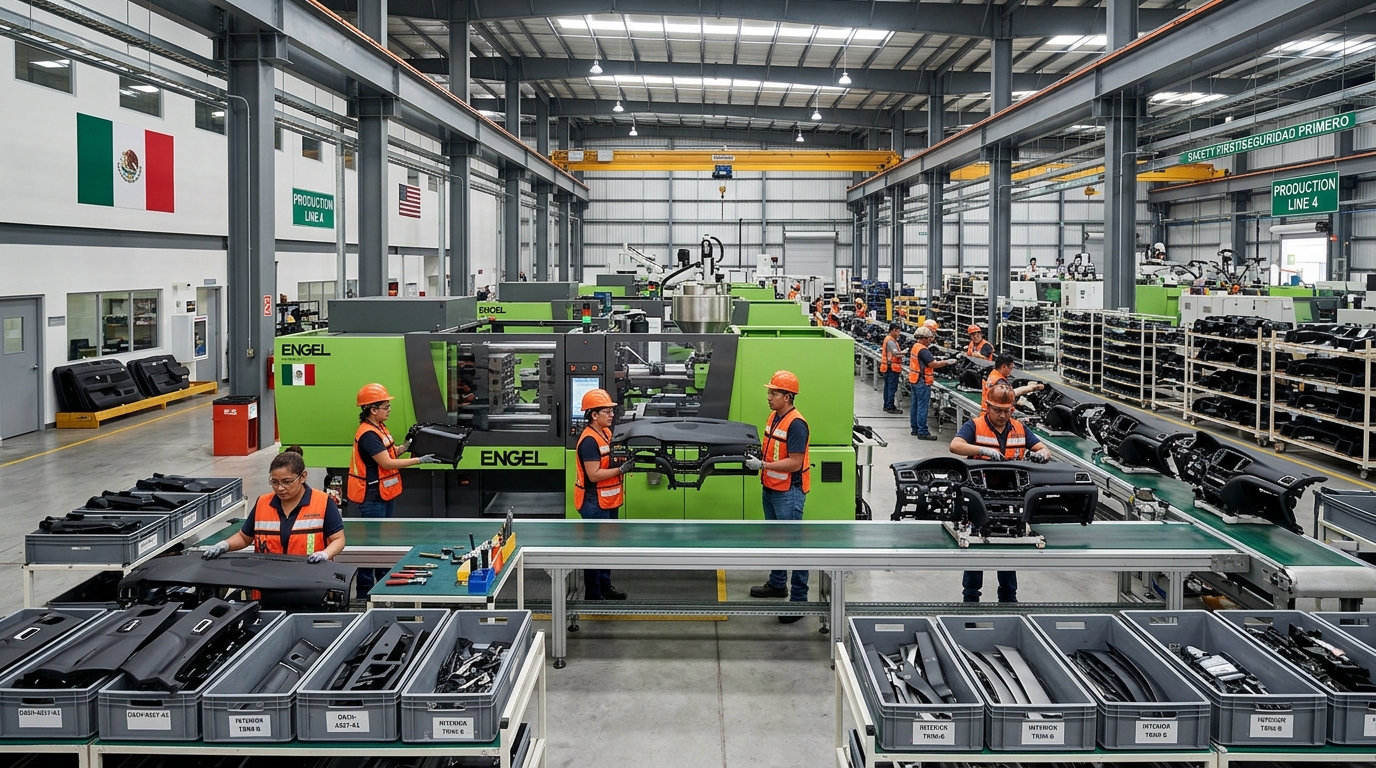
Mexico's Automotive Plastic Manufacturing Landscape
Mexico has established itself as North America's automotive manufacturing powerhouse, with the plastic components sector playing a pivotal role in this growth. The country's strategic location, skilled workforce, and advanced manufacturing infrastructure have attracted major automotive OEMs and Tier 1 suppliers, creating a comprehensive ecosystem for plastic parts production.
Key Manufacturing Regions
Bajío Region The Bajío region, encompassing Guanajuato, Querétaro, and San Luis Potosí, serves as Mexico's automotive heartland. This area hosts numerous automotive plastic manufacturers specializing in interior components, dashboard assemblies, and structural plastic parts. The region's proximity to major automotive plants and established supply chains makes it ideal for just-in-time manufacturing.
Northern Border States States like Nuevo León, Chihuahua, and Sonora offer strategic advantages for companies prioritizing quick delivery to US markets. These regions excel in producing automotive plastic parts for cross-border shipment, with many facilities located within hours of major US automotive assembly plants.
Central Mexico The State of Mexico and surrounding areas provide access to Mexico's largest market while maintaining competitive manufacturing costs. This region is particularly strong in producing plastic components for the domestic automotive market and export operations.
Directory of Automotive Plastic Manufacturers in Mexico
Tier 1 Automotive Suppliers
Mexico hosts several international Tier 1 automotive suppliers with extensive plastic manufacturing capabilities:
| Company | Location | Specializations | Key Capabilities |
|---|---|---|---|
| Magna International | Multiple facilities | Interior systems, exterior trim | Injection molding, assembly |
| Faurecia | Puebla, Querétaro | Cockpit modules, door panels | Advanced plastic forming |
| Johnson Controls | Various locations | Seating components, interiors | Multi-material integration |
| Plastic Omnium | León, Guanajuato | Bumpers, fuel systems | Large part injection molding |
| Valeo | Multiple sites | Lighting, thermal systems | Precision plastic components |
Regional Plastic Manufacturers
Northern Region Specialists
- Grupo Simoldes: Specializes in automotive plastic injection molding with facilities in Puebla and Querétaro
- Industrias CH: Focus on interior plastic components and trim parts
- Metalsa: Structural plastic components and composite materials
Bajío Region Manufacturers
- Grupo Antolin: Interior systems and plastic components for automotive applications
- Gestamp: Plastic and composite automotive parts manufacturing
- Nemak: Lightweight plastic components and advanced materials
Injection Molding Specialists
Mexico's injection molding capabilities for automotive applications are extensive, with manufacturers offering:
- High-volume production: Facilities capable of producing millions of parts annually
- Multi-cavity tooling: Advanced tooling for complex automotive plastic components
- Insert molding: Integration of metal inserts and electronic components
- Overmolding: Multi-material component production for enhanced functionality
Manufacturing Capabilities and Technologies
Advanced Manufacturing Processes
Mexican automotive plastic manufacturers have invested heavily in state-of-the-art technologies:
Injection Molding Technologies
- Gas-assisted injection molding for hollow components
- In-mold decoration and labeling capabilities
- Multi-shot molding for complex assemblies
- Micro-injection molding for small precision parts
Secondary Operations
- Automated assembly and integration
- Welding and joining technologies
- Paint and coating applications
- Quality testing and validation
Quality Certifications and Standards
Mexico's automotive plastic manufacturers maintain rigorous quality standards:
- IATF 16949: Automotive quality management certification
- ISO 14001: Environmental management compliance
- OHSAS 18001: Occupational health and safety standards
- Customer-specific requirements: Ford Q1, GM Supplier Quality, Toyota Production System
Cost Advantages and Economic Benefits
Labor Cost Competitiveness
Mexico offers significant labor cost advantages compared to traditional manufacturing regions:
- Skilled technician wages: 60-70% lower than US equivalent positions
- Engineering talent: Competitive rates with strong technical education background
- Productivity levels: High efficiency rates comparable to developed manufacturing regions
USMCA Trade Benefits
The United States-Mexico-Canada Agreement provides substantial advantages for automotive plastic manufacturing:
- Tariff elimination: Zero tariffs on qualifying automotive components
- Rules of origin: Favorable treatment for North American content
- Streamlined customs: Reduced administrative burden for cross-border trade
Total Cost of Ownership
When evaluating nearshore automotive manufacturing, companies typically see (run the numbers with our TCO calculator):
- Logistics savings: Reduced shipping times and costs compared to Asia
- Inventory reduction: Lower safety stock requirements due to proximity
- Currency stability: Reduced foreign exchange risk
- Supply chain resilience: Decreased exposure to global disruptions
Supply Chain Integration
Proximity to Major Automotive Hubs
Mexico's strategic location provides unparalleled access to North American automotive markets:
Detroit Corridor Access
- 1-3 day ground transportation to Michigan automotive plants
- Direct highway connections via major transportation corridors
- Established cross-border logistics infrastructure
Southern Automotive Cluster
- Close proximity to Alabama, Tennessee, and South Carolina plants
- Efficient rail and truck transportation networks
- Growing automotive supplier ecosystem
Logistics Infrastructure
Mexico's transportation infrastructure supports efficient automotive plastic parts distribution:
- Highway systems: Modern toll roads connecting major manufacturing regions
- Rail networks: Direct rail service to US automotive markets
- Port facilities: Pacific and Atlantic coast access for global material sourcing
- Airport cargo: Air freight capabilities for time-sensitive shipments
Technology Transfer and Tooling Migration
Mold and Tooling Transfer Process
We at Reshore have facilitated numerous successful tooling transfers from China to Mexico, streamlining the process for automotive plastic manufacturers:
Assessment Phase
- Comprehensive mold condition evaluation
- Production capability analysis
- Quality requirement verification
- Timeline and cost estimation
Transfer Execution
- Professional packing and shipping coordination
- Customs clearance and documentation
- Installation and setup supervision
- Trial production and validation
Production Optimization
- Process parameter adjustment
- Local material sourcing integration
- Quality system implementation
- Production scaling support
Technology Capabilities
Mexican automotive plastic manufacturers offer advanced technological capabilities:
- CAD/CAM systems: Latest design and manufacturing software
- Simulation tools: Mold flow analysis and process optimization
- Automation: Robotic systems for handling and assembly
- Digital manufacturing: Industry 4.0 implementation and connectivity
Quality Control and Testing Capabilities
Testing and Validation Infrastructure
Mexico's automotive plastic manufacturing facilities maintain comprehensive testing capabilities:
Material Testing
- Tensile and impact strength testing
- Environmental durability testing
- Chemical resistance validation
- Flammability and safety compliance
Dimensional Verification
- Coordinate measuring machines (CMM)
- Optical measurement systems
- Statistical process control implementation
- First article inspection protocols
Continuous Improvement Systems
Mexican manufacturers implement robust quality systems:
- Lean manufacturing: Waste reduction and efficiency improvement
- Six Sigma: Statistical process improvement methodologies
- Kaizen events: Continuous improvement culture
- Supplier development: Quality system extension to supply base
Environmental and Sustainability Considerations
Green Manufacturing Initiatives
Mexico's automotive plastic manufacturers are increasingly focused on sustainability:
Recycled Content Integration
- Post-consumer recycled plastic utilization
- Closed-loop recycling systems
- Bio-based plastic material adoption
- Waste stream reduction programs
Energy Efficiency
- Renewable energy adoption
- Energy management systems
- Carbon footprint reduction
- Water conservation programs
Regulatory Compliance
Mexican manufacturers maintain compliance with international environmental standards:
- REACH compliance: Chemical substance regulations
- RoHS directives: Restriction of hazardous substances
- End-of-life vehicle regulations: Recyclability requirements
- Corporate sustainability reporting: Transparency and accountability
Getting Started with Mexico Manufacturing
Evaluation Process
When considering Mexico for automotive plastic manufacturing, companies should evaluate:
Manufacturing Requirements
- Production volume needs
- Quality specifications
- Delivery requirements
- Technical capabilities
Supplier Assessment
- Financial stability
- Technical competence
- Quality systems
- Cultural fit
Partner Selection Criteria
Successful nearshore manufacturing partnerships require careful supplier selection. Use our Supplier Qualification Checklist as your vetting framework:
- Proven automotive experience: Track record with automotive OEMs
- Quality certifications: Relevant industry certifications
- Technical capabilities: Appropriate manufacturing technologies
- Financial strength: Ability to invest in growth and improvement
Reshore's AI-powered platform streamlines the entire process of identifying and evaluating Mexican automotive plastic manufacturers, providing comprehensive assessments and facilitating successful partnerships.
Future Outlook and Industry Trends
Market Growth Projections
Mexico's automotive plastic manufacturing sector continues to expand:
- Investment growth: Increasing foreign direct investment in manufacturing facilities
- Technology advancement: Adoption of advanced manufacturing technologies
- Market expansion: Growing domestic automotive market
- Export opportunities: Increased North American content requirements
Emerging Technologies
The industry is embracing new technologies and materials:
Advanced Materials
- Carbon fiber reinforced plastics
- Bio-based automotive plastics
- Lightweight composite materials
- Smart materials with embedded sensors
Manufacturing Innovation
- Additive manufacturing integration
- Digital twin technology
- Predictive maintenance systems
- Artificial intelligence optimization
Frequently Asked Questions
Q: What are the main advantages of sourcing automotive plastic parts from Mexico compared to China?
Mexico offers significant advantages including 60-70% lower logistics costs, 2-3 day delivery times versus 30-45 days from China, zero tariffs under USMCA, reduced inventory requirements, and greater supply chain resilience. Additionally, Mexico provides better intellectual property protection and easier communication due to time zone alignment and cultural similarities.
Q: How long does it typically take to transfer injection molding tooling from China to Mexico?
The complete tooling transfer process typically takes 8-12 weeks, including mold assessment, shipping, customs clearance, installation, and validation. Reshore's coordinated approach can reduce this timeline by handling all logistics, documentation, and technical coordination to ensure seamless transitions.
Q: What quality certifications should I look for in Mexican automotive plastic manufacturers?
Look for IATF 16949 (automotive quality management), ISO 14001 (environmental management), and customer-specific approvals like Ford Q1 or GM Supplier Quality. Additionally, verify capabilities for statistical process control, first article inspection, and material testing certifications relevant to your specific automotive applications.
Q: Are there sufficient skilled workers in Mexico for automotive plastic manufacturing?
Yes, Mexico has a well-developed technical education system producing skilled manufacturing workers. The country graduates over 100,000 engineering students annually, and many automotive regions have established technical training programs specifically for plastic manufacturing and injection molding operations.
Q: What are the typical cost savings when moving automotive plastic manufacturing from China to Mexico?
Companies typically see 15-25% total cost reductions when considering all factors. While labor costs in Mexico may be slightly higher than China, savings come from reduced logistics costs (60-70% lower), decreased inventory requirements (50-60% reduction), faster time-to-market, and elimination of tariffs under USMCA.
Q: How does Reshore help companies transition automotive plastic manufacturing to Mexico?
Reshore provides end-to-end support including supplier matching through our AI-powered platform, tooling transfer coordination, factory sourcing, quality system setup, and production launch support. Our comprehensive approach ensures operational manufacturing setups are established in record time without companies having to rebuild their supply chains from scratch.
Q: What regions in Mexico are best for automotive plastic parts manufacturing?
The Bajío region (Guanajuato, Querétaro, San Luis Potosí) offers the densest automotive supplier ecosystem. Northern border states provide fastest access to US markets. Central Mexico offers cost advantages and domestic market access. The best choice depends on your specific customer locations, volume requirements, and supply chain strategy.
Q: What environmental and sustainability capabilities do Mexican automotive plastic manufacturers offer?
Mexican manufacturers increasingly offer recycled content integration, bio-based materials, closed-loop recycling systems, and renewable energy usage. Many facilities maintain ISO 14001 certification and comply with international environmental standards including REACH and RoHS directives for global automotive supply chains.