
Case Study: Reshoring a Plastics Program from Shenzhen to Texas
April 23, 2026
Case Study: Reshoring a Plastics Program from Shenzhen to Texas
When a mid-sized consumer electronics accessories brand approached us in mid-2025, they were bleeding margin. Their flagship product line — a family of injection-molded enclosures and over-molded cable assemblies — had been produced in Shenzhen for nearly a decade. Tariffs, freight volatility, and a 14-week door-to-door lead time had pushed their landed cost 41% higher than it had been in 2019. They needed out, but they didn't know where to start.
This is the full account of how we at Reshore helped them transfer their tooling, qualify a new injection molder in the Dallas–Fort Worth metroplex, and restart production in Texas in under six months — without rebuilding their program from scratch.
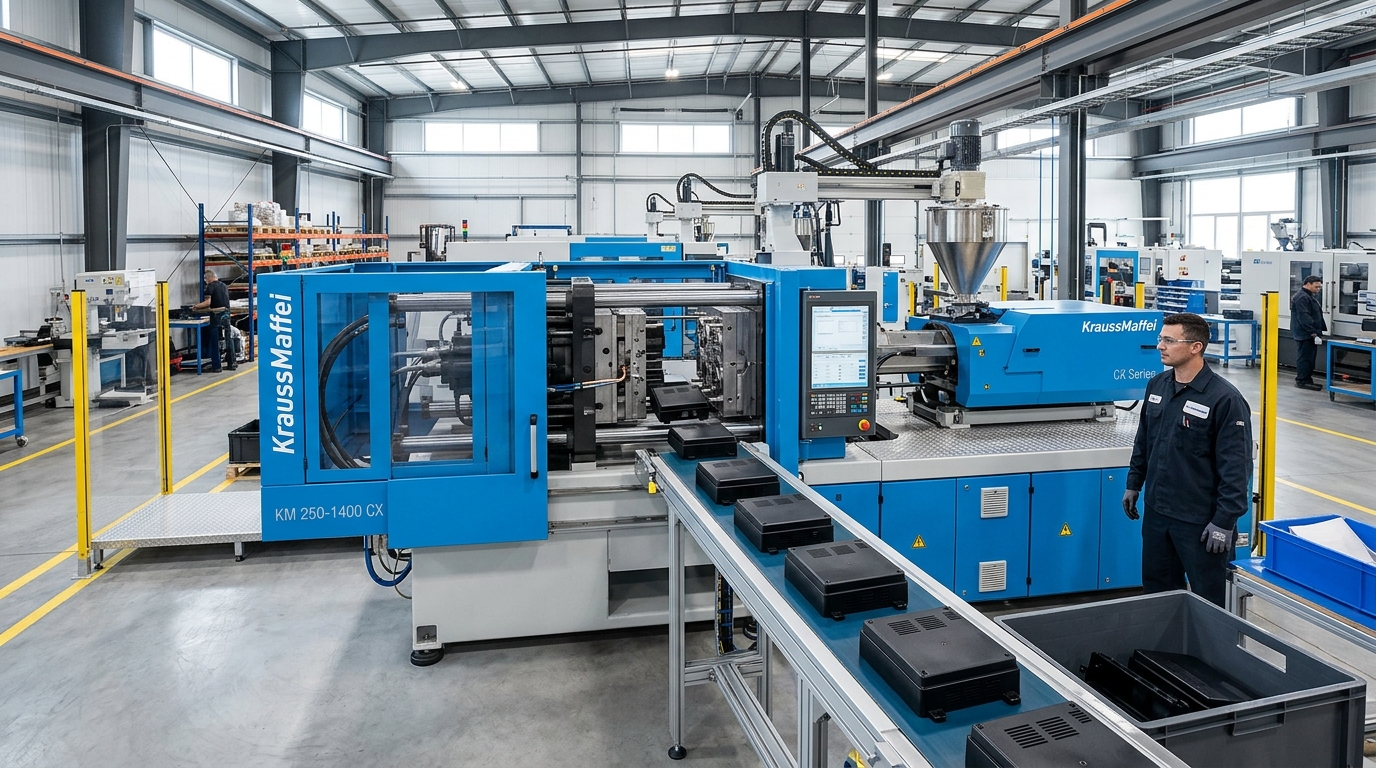
Client Snapshot
To protect the client's competitive position, we'll refer to them here as "Client A."
| Attribute | Detail |
|---|---|
| Industry | Consumer electronics accessories |
| Annual units (SKU family) | ~1.2 million |
| Primary processes | Injection molding, over-molding, light assembly |
| Primary resins | ABS, TPE, PC/ABS blend |
| Original location | Shenzhen, Guangdong Province, China |
| Tooling count | 14 production molds (steel, multi-cavity) |
| Reshoring destination | Fort Worth, Texas, USA |
| Timeline | 5.5 months (Kickoff → First PPAP approval) |
Why Client A Decided to Reshore
Three forces converged:
- Tariff exposure. The product family sat squarely in tariff categories that had stacked up through multiple policy cycles. By late 2025, the effective duty added roughly 22% to their landed cost.
- Inventory risk. A pandemic-era port backlog had once forced them into $380K of emergency airfreight. They were carrying 18 weeks of safety stock as a hedge — tying up working capital.
- Customer pressure. Two of their largest US retail accounts had begun requiring "Made in USA" or "Made in Americas" sourcing disclosures for buyer scorecards.
Client A had considered a China+1 strategy (keeping China while adding a second source in Vietnam or Mexico), but after modeling total cost of ownership, full reshoring to the US emerged as the stronger long-term play. If you're weighing that same question, our breakdown of China+1 vs. Full Reshoring walks through the decision framework in detail.
Phase 1: Discovery & TCO Modeling (Weeks 1–3)
The first step was a true apples-to-apples cost comparison — not just piece-part price, but total cost of ownership including freight, duties, inventory carrying cost, quality failure rates, and tooling amortization.
What We Found
| Cost Component | Shenzhen (Legacy) | Fort Worth (Projected) |
|---|---|---|
| Piece-part price (blended) | $1.82 | $2.41 |
| Tariff/duty | $0.40 | $0.00 |
| Ocean freight + drayage | $0.27 | $0.04 (truck) |
| Inventory carrying (18 wks vs. 4 wks) | $0.19 | $0.04 |
| Quality/scrap allowance | $0.11 | $0.06 |
| Landed cost per unit | $2.79 | $2.55 |
Net savings of roughly 8.6% per unit — but the bigger wins were qualitative: a 10-week reduction in lead time, working capital freed from safety stock, and the ability to label the product "Made in USA."
Phase 2: Tooling Audit and Transfer Strategy (Weeks 3–6)
Tooling transfer is where most reshoring projects either succeed or quietly die. We audited all 14 molds while they were still running production in Shenzhen.
The Audit Revealed
- 9 molds were in good condition with documented steel grades (P20, H13) and could be shipped as-is.
- 3 molds needed refurbishment — worn ejector pins, degraded cooling lines, and one cracked insert.
- 2 molds were beyond economical repair. The cavity counts no longer matched current demand anyway, so we recommended building replacements in the US.
Reshore coordinated the full extraction: mold release negotiations with the Chinese factory (always sensitive — we've seen molds held hostage over disputed invoices), export documentation, crating, ocean freight to the Port of Houston, and inland haul to Fort Worth. Total transfer logistics: 7 weeks.
Lesson learned: Always get a notarized mold ownership agreement at the start of any offshore program. Client A had one; it saved us approximately three weeks of back-and-forth.
Phase 3: Supplier Matching in Texas (Weeks 4–8, parallel)
While tooling was in transit, we ran our AI-powered supplier matching engine against the Americas manufacturer network. For Client A's resin mix, cavity counts, and volume, we surfaced 11 qualified injection molders in Texas, Oklahoma, and Arkansas.
We shortlisted four, conducted virtual capability reviews, and did two on-site audits. The winning facility in Fort Worth offered:
- 12 presses from 80 to 500 tons (covering the full tool range)
- In-house over-molding capability (critical for the TPE grip components)
- ISO 9001:2015 certification and prior consumer electronics experience
- 4-hour drive to Client A's distribution center in Dallas
Phase 4: Qualification, PPAP, and Production Launch (Weeks 14–22)
Once tooling landed and was installed, we ran a structured qualification sequence:
- First-article inspection (FAI) on each mold
- Dimensional validation against original Chinese samples and CAD
- Process capability studies (Cpk) on critical-to-quality dimensions
- PPAP Level 3 submission to Client A's quality team
- Pilot run of 5,000 units per SKU
- Full production release
Two molds required minor rework during qualification — a cooling imbalance in one family mold caused flash on the B-side cavity, and another needed a gate modification after resin flow analysis flagged a short-shot risk. Neither derailed the timeline.
Results: Six Months In
Six months after the first production shipment from Fort Worth:
- Landed cost reduction: 8.6% per unit (on track for 11% once tooling is fully amortized)
- Lead time: Reduced from 14 weeks to 3 weeks
- On-time delivery: Improved from 81% to 97%
- Safety stock: Cut from 18 weeks to 5 weeks, freeing ~$940K in working capital
- Quality PPM: Dropped from 2,400 to 680
- "Made in USA" label: Unlocked placement with two new national retail accounts
What Made This Reshoring Project Work
Looking back, five factors drove success:
- Clear tooling ownership from day one
- TCO modeling that accounted for inventory and tariff impact, not just piece-part price
- Parallel workstreams — supplier qualification ran concurrently with mold transfer
- A domestic molder with genuine over-molding capability (many US shops claim this but can't execute consistently)
- Structured PPAP rather than skipping validation to "save time"
These are the same principles we apply across every reshoring engagement. If you're seeing yourself in Client A's situation, we'd recommend starting with our Reshoring Assessment — a structured review of your tooling, resin choices, volumes, and landed cost that produces a defensible go/no-go recommendation in about two weeks.
Where This Fits in Your Own Reshoring Journey
Every plastics program is different. A blow-molded bottle line, a thermoformed clamshell program, and a multi-cavity injection tool each have different transfer economics. Before committing capital, we recommend:
- Reviewing our Injection Molding vs. Blow Molding vs. Thermoforming buyer's guide to confirm your process fit
- Modeling your resin supply outlook — US availability for ABS, PC, and PP differs meaningfully from specialty resins
- Mapping your month-by-month timeline so stakeholders understand when cash outflows and production gaps will occur
Frequently Asked Questions
Q: How long does it typically take to reshore a plastics program from China to the US?
Most plastics reshoring projects with existing tooling take 4–8 months from kickoff to first production shipment. The biggest variables are mold condition, export release negotiations in China, and PPAP requirements on the receiving end. Building new tooling instead of transferring adds roughly 10–16 weeks.
Q: What does it cost to transfer injection molds from Shenzhen to Texas?
For a program of 10–15 steel production molds, budget $35,000–$80,000 for extraction, crating, ocean freight, customs, inland haul, and installation. Refurbishment costs are separate and depend on mold condition — typically $2,000–$15,000 per mold for cleaning, new ejector pins, and cooling line service.
Q: Is injection molding reshoring actually cheaper than producing in China?
On piece-part price alone, usually no — US labor and overhead run higher. But when you add tariffs, ocean freight, inventory carrying cost, quality failures, and lead-time risk, full landed cost is often within 5–15% of China and sometimes lower. The gap has narrowed sharply since 2022.
Q: What plastics processes are best suited for reshoring to the US?
Injection molding, over-molding, and blow molding all reshore well because the US has a deep installed base of equipment and skilled operators. Thermoforming is highly competitive domestically. The hardest cases tend to be very high-volume, low-margin commodity parts where Asian labor cost still dominates.
Q: Does Reshore handle the entire tooling transfer process, or just the supplier match?
We at Reshore coordinate the full engagement — tooling audits, export release, logistics, US supplier matching, qualification, and PPAP oversight. Clients can also engage us for individual phases, but the end-to-end model is where we see the fastest timelines and fewest surprises.
Q: How does Reshore find qualified injection molders in Texas and the rest of the US?
Our AI-powered supplier matching engine evaluates Americas-based manufacturers against your specific requirements — press tonnage, resin experience, cavity counts, certifications, and location. Every manufacturer in our network is vetted, and matches are ranked by capability fit, capacity availability, and geographic proximity to your distribution footprint.
Q: What happens if the Chinese factory refuses to release our tooling?
This is unfortunately common when there are disputed invoices, minimum-order commitments, or informal ownership agreements. We recommend negotiating a formal mold release — often involving a final payment or a structured ramp-down order — rather than litigating. In rare cases, rebuilding tooling in the US is faster and cheaper than fighting for molds that may have been poorly maintained anyway.
Q: Can I reshore just part of my plastics program as a China+1 strategy?
Yes, and for many companies this is the right first step. You keep existing Chinese production running while qualifying a US or Mexico source for a portion of volume — often 20–40% to start. It de-risks the transition and gives you negotiating leverage with both suppliers. Our team can model whether China+1 or full reshoring fits your program — factoring in tooling portability, tariff exposure, volume, and risk tolerance — within a two-week assessment. Request an assessment to get started.
Ready to get started? Request a reshoring assessment or run a cost comparison — we’ll respond within one business day.