
The 2026 Guide to Nearshoring Manufacturing in Mexico
April 23, 2026
The 2026 Guide to Nearshoring Manufacturing in Mexico
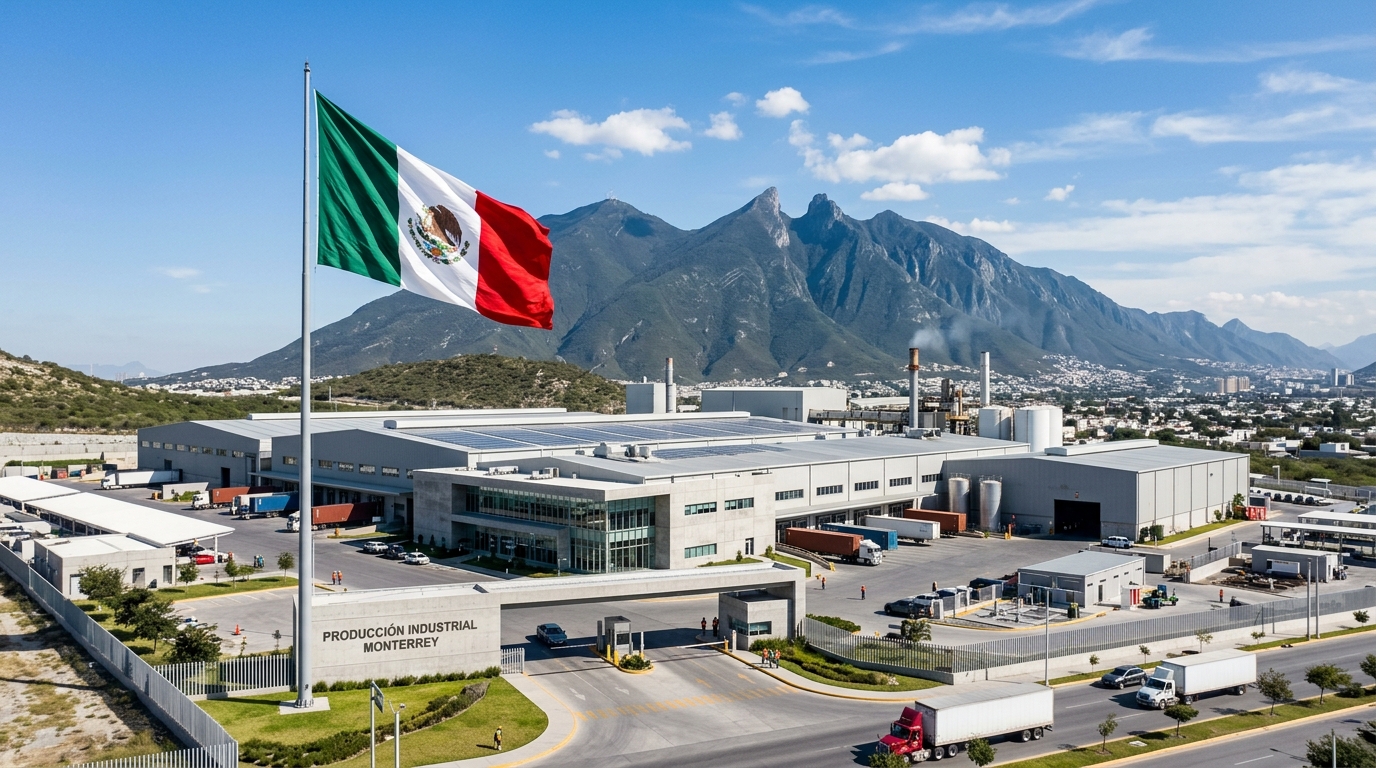
For more than two decades, "Made in China" was the default answer for US brands sourcing plastic parts, injection-molded components, and finished consumer goods. That equation has changed. Rising tariffs, geopolitical friction, shipping volatility, and a post-pandemic rethinking of supply chain risk have pushed thousands of US companies to reconsider where — and how — their products get built.
In 2026, the most pragmatic answer for many of them isn't a full reshore back to the United States. It's nearshoring to Mexico.
At Reshore, we help US companies relocate manufacturing from China to Mexico and the US every day, with a particular focus on plastics and injection molding. This guide distills what we've learned about why Mexico has become the center of gravity for North American manufacturing, how the process actually works, and what to watch out for before you commit.
Why Nearshoring to Mexico Accelerated in 2026
The nearshoring conversation started picking up steam in 2018 with the first wave of Section 301 tariffs on Chinese imports. But three compounding forces turned it from a "consideration" into an urgent board-level priority over the past two years:
- Tariff escalation. Cumulative tariffs on many categories of Chinese-made plastic and electronic goods now exceed 40–60% when combined with Section 301, anti-dumping duties, and the most recent executive actions. Manufacturers landing product under USMCA pay 0% on qualifying goods.
- Supply chain resilience mandates. After the Red Sea disruptions, Panama Canal drought restrictions, and multiple port labor actions, CFOs are done pricing 45-day transits as "normal." Mexico-to-US overland freight typically runs 2–5 days.
- Labor arbitrage is narrowing in China, not Mexico. Average Chinese manufacturing wages have risen roughly 4–6x over the past 15 years. Skilled Mexican manufacturing wages, particularly in the plastics and automotive corridors, remain 30–50% below comparable US rates while quality has climbed steadily.
According to Bank of America research and Kearney's annual Reshoring Index, Mexico overtook China in 2023 as the top source of US imports for the first time in two decades — and that lead has widened every quarter since.
The Core Economic Case: USMCA
The United States-Mexico-Canada Agreement (USMCA), which replaced NAFTA in 2020, is the single most important lever in the nearshoring equation. For plastic manufacturing in particular, USMCA offers:
- Duty-free access for qualifying goods crossing the US-Mexico border
- Regional Value Content (RVC) rules that reward North American–sourced resins, pellets, and components
- Streamlined customs procedures under authorized economic operator programs
- Currency stability relative to the cost volatility of yuan-denominated contracts
For an article-by-article comparison of how USMCA stacks against China tariffs, our team maintains a living analysis on USMCA vs. tariffs and why Mexico manufacturing wins in 2026. The short version: if your product qualifies for USMCA preferential treatment, your landed cost advantage over China-origin equivalents is often 25–40% before you even account for logistics savings.
Mexico vs. China: The Numbers That Matter
Here's the side-by-side picture we share with clients during their initial reshoring assessment:
| Metric | China | Mexico |
|---|---|---|
| Typical tariff on plastic goods (2026) | 25–60%+ | 0% under USMCA |
| Ocean/land transit to US Midwest | 30–45 days | 2–5 days by truck |
| Average injection molder labor rate | $6–9/hr loaded | $5–8/hr loaded |
| IP protection rating (US Chamber index) | Moderate-Low | Moderate-High |
| Minimum order quantities (typical) | High | Flexible |
| Time zone alignment with US | 12–13 hr offset | 0–2 hr offset |
| Rapid prototyping turnaround | 2–4 weeks + shipping | 3–10 days incl. delivery |
Quality, which was once Mexico's Achilles' heel, has closed dramatically. Most tier-one Mexican injection molders now hold ISO 9001 certification, with medical and automotive suppliers adding ISO 13485 and IATF 16949. For a deeper dive, we've published an injection molding quality standards comparison between China and Mexico, as well as an ISO certification guide for Mexico plastic manufacturers.
Mexico's Manufacturing Regions: Where to Build
Mexico is not a monolith. Picking the right region matters almost as much as picking the right contract manufacturer. Here's how the major plastic-manufacturing corridors stack up:
Monterrey (Nuevo León)
The industrial heart of northern Mexico and the epicenter of the current nearshoring wave. Deep tooling ecosystem, strong engineering talent, excellent logistics via Laredo. Best for mid-to-high complexity injection molding, electronics enclosures, and automotive plastics.
Saltillo & Ramos Arizpe (Coahuila)
Automotive-adjacent, with heavy capabilities in large-tonnage molding and overmolding. Competitive labor costs and established tier-1/tier-2 supplier networks.
Tijuana & Mexicali (Baja California)
The go-to region for medical device plastics and consumer electronics. Close proximity to San Diego and strong cluster of FDA-registered facilities. Premium labor rates relative to interior Mexico but unmatched for cross-border just-in-time flows.
Guadalajara (Jalisco)
"Mexico's Silicon Valley." Strong in high-precision plastics, medical, and consumer electronics. Excellent engineering universities feeding the talent pipeline.
Querétaro & Bajío Region
Aerospace, automotive, and precision plastics. High-quality infrastructure, stable labor environment, increasingly popular with European and Asian OEMs building Mexican operations.
We maintain a detailed breakdown in our Mexico manufacturing regions comparison for plastic industry buyers.
The Nearshoring Process: What Actually Happens
Companies often imagine reshoring as an 18-month, multi-million-dollar project. It doesn't have to be — especially if you already have working tooling in China.
Step 1: Reshoring Assessment
Before moving anything, you need an honest inventory: Which SKUs are candidates? What's the condition of your molds? What tolerances, materials, and certifications are required? Which Mexican regions fit your product class and logistics needs?
Step 2: Mold Transfer from China
This is where most projects get stuck. Chinese mold makers often hold tooling hostage, refuse to release CAD files, or deliver molds in poor condition. Navigating export paperwork, VAT refunds, and ocean freight to Mexico requires experience. Our mold transfer from China to Mexico playbook covers the legal, technical, and logistical steps in detail.
Step 3: Supplier Matching & Factory Sourcing
Not every Mexican injection molder can handle your part. Matching tonnage requirements, material capabilities, certifications, and capacity to your program is the difference between a 3-month ramp and a 12-month headache.
Step 4: Validation & Production Qualification
PPAP, first-article inspection, capability studies. Mexican tier-one suppliers are well-versed in US OEM requirements — but only if the program is specified correctly from the start.
Step 5: Logistics & Ongoing Management
Cross-border trucking, customs brokerage, USMCA certificates of origin, and ongoing supplier management. This is where the nearshoring advantage shows up in real cash flow.
Industry-Specific Considerations
Consumer Goods Plastics
Fast-moving consumer goods brands are some of Mexico's biggest nearshoring wins. Shorter lead times mean leaner inventory, faster response to demand shifts, and reduced obsolescence risk. See our collection of consumer goods plastic manufacturing success stories for real examples.
Medical Devices
FDA-registered Mexican facilities — particularly in Tijuana, Guadalajara, and Juárez — are now among the most sophisticated medical plastic manufacturers in the world. If you're moving Class II or Class III device production, our medical device manufacturing migration guide covers FDA compliance, ISO 13485 validation, and clean room requirements.
Electronics
One of our clients, a US consumer electronics brand, documented a 32% total landed cost reduction after moving injection-molded enclosures and sub-assemblies from Shenzhen to Monterrey. The full story is in our case study on nearshoring to Monterrey.
Common Pitfalls (and How to Avoid Them)
After coordinating dozens of China-to-Mexico transitions, these are the mistakes we see repeated most often:
- Treating Mexico like "China lite." The sourcing playbook is different. Vetting, contracts, and quality systems require a Mexico-native approach.
- Underestimating mold condition. Chinese molds are often run past their design life. Budget for refurbishment or replacement when planning the transfer.
- Ignoring USMCA qualification. Buying Chinese resin and shipping it to Mexico for molding does not automatically qualify your product for preferential treatment. Regional Value Content rules matter.
- Skipping the supplier visit. Video calls don't replace plant audits. Due diligence in Mexico is as essential as it ever was in China.
- Rushing the ramp. Qualify thoroughly. A bad first PPAP run can set the whole program back two quarters.
Is Nearshoring Right for You?
Nearshoring to Mexico makes the most sense when:
- Your product is tariff-exposed and USMCA-qualifiable
- Lead time and inventory carrying costs are significant
- You need tighter engineering collaboration and faster design iteration
- IP sensitivity or geopolitical risk is a board-level concern
- Your volumes justify dedicated tooling and supplier relationships
It makes less sense for ultra-low-margin, ultra-high-volume commodities where Chinese scale still dominates — though even that calculus shifts every quarter.
How Reshore Fits In
We built Reshore because the nearshoring process, done right, is complex, opaque, and high-stakes — and done wrong, it's expensive. Our AI-powered platform coordinates the entire relocation: tooling transfer, supplier matching, factory sourcing, logistics, and production setup. Companies working with us typically go from "we should look at Mexico" to operational production in a fraction of the time a traditional consulting engagement requires.
If you're evaluating whether nearshoring is the right move, the best starting point is a reshoring assessment — a structured review of your tooling, SKUs, and supply chain to model the real savings and risk profile. You can also join the Reshore waitlist to access our supplier directory and AI-powered sourcing tools as they roll out.
Frequently Asked Questions
Q: How long does it typically take to move manufacturing from China to Mexico?
For a well-scoped single-product relocation with existing tooling, plan on 4–9 months from kickoff to full production. Complex multi-SKU programs or tooling that requires significant refurbishment typically take 12–18 months. Reshore’s coordinated approach — running supplier qualification, tooling documentation, and logistics planning in parallel — compresses most timelines by 30–40% compared to self-managed transitions. See our month-by-month Reshoring Project Timeline for a detailed breakdown by phase.
Ready to get started? Request a reshoring assessment or run a cost comparison — we’ll respond within one business day.