
Extended Payment Terms & Supplier Pay Programs
May 18, 2026
Extended Payment Terms & Supplier Pay Programs: A Working Capital Guide for Nearshoring Manufacturers
When US companies move production from China to Mexico, the operational benefits get most of the attention: shorter lead times, fewer container shocks, USMCA duty advantages, and the ability to actually fly to your supplier in three hours instead of fifteen. What gets less attention — and quietly determines whether a nearshoring program scales or stalls — is how the cash flow between purchase order and final payment is structured.
Extended payment terms and supplier pay programs are the two levers most US importers and Mexican producers underuse. Done well, they free millions in working capital without strangling the supplier base. Done poorly, they push small Mexican factories into liquidity crises, kill on-time delivery, and quietly tax your margin through hidden price increases.
This guide breaks down how extended terms actually work in cross-border manufacturing, where supplier pay programs fit, and how to think about the trade-offs before you roll one out across your supplier base.
Why Payment Terms Are a Strategic Lever in Nearshoring
In a domestic supply chain, payment terms are mostly an accounting conversation. In a cross-border nearshoring program, they're a sourcing constraint.
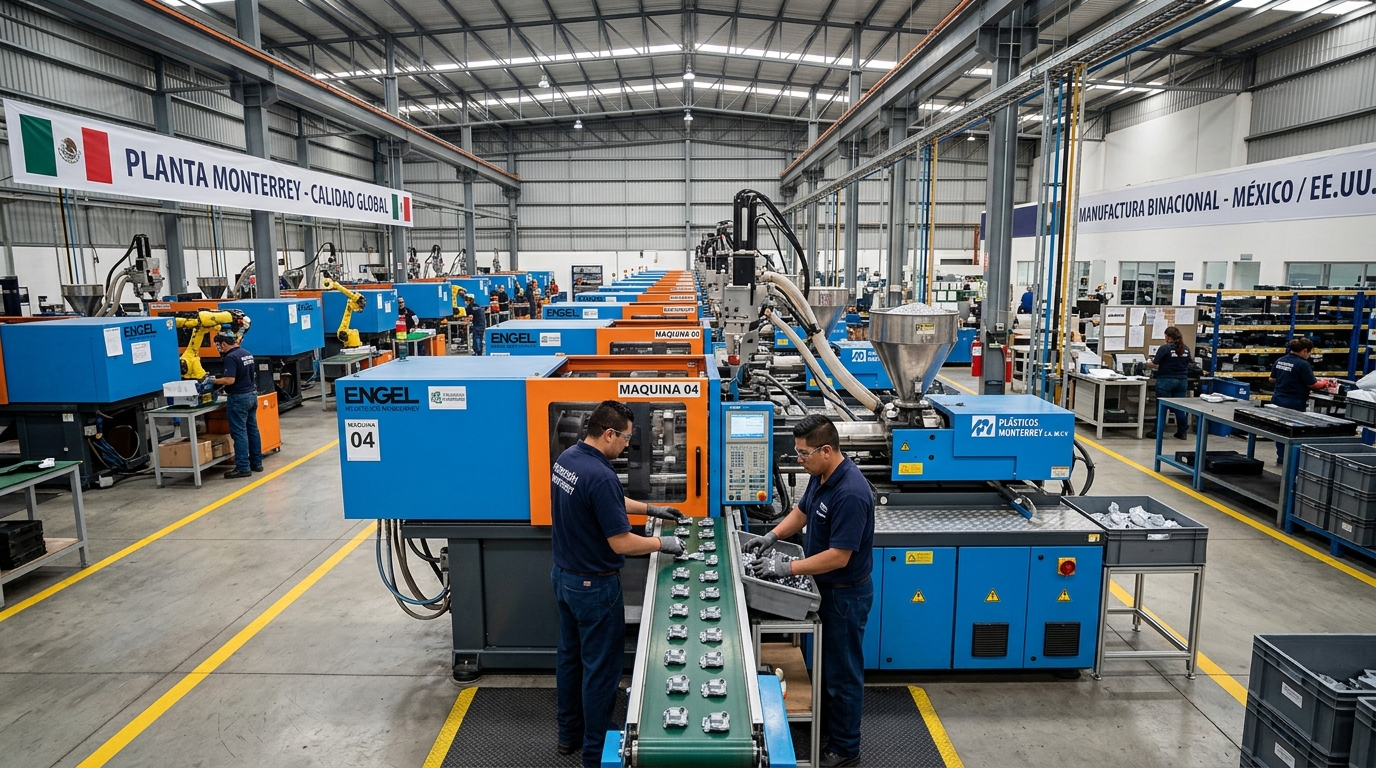
Mexican manufacturers — particularly the mid-sized injection molders, metal fabricators, and contract assemblers concentrated in Monterrey, Querétaro, Guadalajara, and Tijuana — typically operate on tighter working capital than their Chinese counterparts. Chinese suppliers were often subsidized by state-linked banks, export rebates, and long-standing trade credit relationships that let them absorb Net 90 and Net 120 terms without flinching. Most Mexican factories cannot.
That means the payment terms you offer (or demand) directly determine:
- Which suppliers will even quote you. A factory with a $4M annual revenue base cannot tie up 90 days of receivables for a single buyer.
- How fast you can ramp. Suppliers strapped for cash can't invest in tooling, raw materials, or second-shift labor to scale your program.
- What price you actually pay. Suppliers under cash pressure either decline the business or quietly bake the financing cost into the unit price — often at rates worse than what you'd pay through a formal supplier pay program.
We at Reshore see this play out constantly during supplier qualification. A factory's stated capacity and its financeable capacity are often two different numbers.
The Net 30 / Net 60 / Net 90 Trade-Off
The most common conversation between a US procurement team and a Mexican supplier is some version of: "We pay Net 60. That's our standard." Here's what each tier actually means for manufacturer cash flow for each side of the table.
| Term | Buyer DPO Impact | Supplier Cash Flow Impact | Typical Use Case |
|---|---|---|---|
| Net 30 | Minimal — close to spot payment | Healthy; supports growth | New supplier relationship, small factories, custom tooling builds |
| Net 60 | Meaningful working capital benefit | Manageable for mid-sized factories with bank lines | Standard cross-border production runs |
| Net 90 | Strong DPO extension; ~30 days of inventory funded by supplier | Significant strain unless paired with a pay program | Large programs with financially stable suppliers or active SCF |
| Net 120+ | Aggressive; rare outside Fortune 500 programs | Unsustainable without third-party financing | Only viable with reverse factoring in place |
The CFO-level math is straightforward: every additional 30 days of DPO frees roughly 8% of annual COGS in working capital. For a $50M sourcing program, moving from Net 30 to Net 60 unlocks around $4M in cash — but only if the supplier doesn't price it back into the PO or fail mid-program. If you want to pressure-test the numbers for your own spend base, our DPO and working capital sizing tool walks through the cash impact under different term and pricing scenarios.
That's where supplier pay programs change the equation.
What Is a Supplier Pay Program?
A supplier pay program — also called reverse factoring, supply chain finance, or approved payables finance — is a structured arrangement where a third-party financier (a bank, a fintech, or an embedded finance platform built for B2B manufacturing) pays the supplier early on the buyer's behalf, while the buyer pays the financier on the originally agreed terms.
The mechanics:
- Supplier ships goods and invoices the buyer.
- Buyer approves the invoice for payment in, say, 75 days.
- Supplier sees the approved invoice on the financing platform and can elect to be paid early — often within 48 hours — at a discount.
- The financier pays the supplier early, then collects the full invoice amount from the buyer on the original due date.
The key insight: the financing cost is priced off the buyer's credit rating, not the supplier's. A small Mexican injection molder that would pay 18–24% for local working capital can suddenly access financing at 6–9% because the buyer is an investment-grade US importer. The supplier gets cheaper cash, the buyer gets longer terms, and both sides typically split the economic benefit. For a deeper walkthrough of setup mechanics, vendor selection, and compliance considerations, see our supplier pay program implementation FAQ.
For background reading, the Global Supply Chain Finance Forum's market standards document the structure and growth of these programs, and trade publications like Global Trade Review cover deal flow and platform vendors.
How to Extend Terms Without Breaking Supplier Relationships
This is where most procurement teams get it wrong. They unilaterally announce Net 90 across the supply base, watch their on-time delivery degrade for two quarters, and then quietly walk it back after a CFO postmortem.
A defensible playbook looks more like this — and we've written a longer field guide on protecting supplier trust while stretching terms that goes deeper on the conversation scripts:
1. Segment your supplier base by financial resilience
Not every supplier needs the same terms. A Tier 1 contract manufacturer with $200M in revenue and a US-bank credit facility can absorb Net 90 comfortably. A specialty tool shop with eight employees cannot. Reshore recommends running a financial health screen as part of supplier qualification — our 12-step framework for qualifying Mexican manufacturers treats balance sheet review as a first-class requirement, not an afterthought.
2. Pair term extensions with a pay program offer
The conversation isn't "we're extending you to Net 75." It's "we're moving to Net 75, and you have the option to be paid in 5 days at a cost of roughly 0.4% of invoice value." That reframes the discussion from "the buyer is squeezing me" to "the buyer is giving me a financing option that's cheaper than my local bank."
3. Don't change terms mid-program
Renegotiating terms on a supplier you've been running for two years on Net 30 is a relationship grenade. Introduce new terms at the RFQ stage for new programs or new product launches, where the supplier can price accordingly and there's no breach of trust.
4. Be honest about the FX dimension
Most Mexican suppliers quote in USD but pay their labor, utilities, and many raw materials in pesos. A 60-day payment term carries real peso/dollar volatility risk for them. Sophisticated programs address this with either FX hedging support or a clearly defined repricing trigger.
5. Measure the right outcome
DPO is not the goal. Free cash flow at constant margin and constant service level is the goal. If your DPO goes up but your unit costs creep 3% and your OTD drops to 87%, you've moved cash from the working capital line to the COGS line and the customer satisfaction line. That's not a win.
Where This Fits in a Reshoring Program
Most companies we work with at Reshore are mid-market US importers moving plastic injection molding, consumer goods, or industrial component production out of China. They typically run Net 30 with their Chinese suppliers (often with deposit structures and L/Cs layered in) and assume they'll port the same terms to Mexico.
That assumption usually breaks. Mexican suppliers want shorter terms; US buyers want longer ones. A supplier pay program is often the cleanest bridge — it lets the buyer hold or extend their DPO while giving the Mexican supplier access to cheaper-than-local financing. We documented one version of this in a case study where a manufacturer unlocked $4.2M in cash by restructuring its supplier terms during a China-to-Mexico transition.
Three practical observations from the field:
- Build financing into the sourcing conversation, not after. Suppliers who know a pay program is available will quote differently — typically 2–5% better on unit price — because they're not pricing in their cost of capital.
- Embedded finance is closing the gap. Traditional bank-led reverse factoring takes 90+ days to set up and only makes economic sense above ~$20M in annual spend. Newer embedded finance platforms can onboard a single supplier in days and work at much lower volumes. For mid-market reshoring programs, this is the unlock — our primer on embedded finance for manufacturing covers how the category has evolved.
- USMCA documentation matters. Lenders pricing your invoices need clean trade documents — commercial invoices, certificates of origin, customs clearances. Programs with sloppy USMCA paperwork get re-priced or rejected.
When Extended Terms Are the Wrong Answer
A few situations where pushing for longer terms is a mistake:
- Tooling builds and NPI programs. Suppliers fronting tooling investment cannot also front 90 days of payment terms. Pay for tooling on milestones.
- Single-source critical components. If a supplier failing disrupts your line, you do not want them on stretched terms without a pay program — full stop.
- Suppliers with concentration risk on your account. If you're 40%+ of their revenue, your terms are their cash flow. Tread carefully.
- Early-stage relationships. Net 30 for the first six months builds trust. Trust is the foundation that makes a later term extension possible.
The Bottom Line for CFOs and CPOs
Extended payment terms and supplier pay programs are not a finance back-office tactic. In a nearshoring program, they're a sourcing strategy, a supplier risk strategy, and a margin strategy rolled together.
The companies winning at this think about it in layers: term structure at the RFQ stage, financial qualification at the supplier-selection stage, and pay program enrollment at the onboarding stage. By the time the first PO is cut, the working capital architecture is already in place.
That's the difference between a reshoring program that frees cash and one that just moves the cash flow problem from one continent to another.
Frequently Asked Questions
Q: What's the difference between factoring and a supplier pay program?
Factoring is initiated by the supplier, who sells their receivables to a financier — often at high rates because the pricing is based on the supplier's credit. A supplier pay program (reverse factoring) is initiated by the buyer, and the financing is priced off the buyer's credit, which is typically much stronger. Both deliver early cash to the supplier, but reverse factoring is almost always cheaper and easier to scale across a supplier base.
Q: How much DPO can a typical mid-market manufacturer realistically extend?
Most mid-market US importers running domestic or nearshore production can move from Net 30 to Net 60 with manageable supplier impact, and to Net 75–90 if paired with a supplier pay program. Moving beyond Net 90 without a financing wrapper almost always results in price increases or supplier attrition that erase the working capital benefit.
Q: Do supplier pay programs work for small Mexican factories?
Increasingly, yes — but it depends on the platform. Traditional bank-led programs require suppliers to go through onerous KYC and onboarding, which excludes small factories. Newer embedded finance platforms have built lightweight onboarding designed specifically for small and mid-sized Mexican suppliers, often onboarding a factory in under a week.
Q: How does Reshore help with payment term structuring during a reshoring move?
Reshore evaluates supplier financial health as part of our standard qualification process and factors payment term capacity into supplier matching. When we identify suppliers who are operationally excellent but capital-constrained, we help structure the buyer-supplier relationship — including pay program options — so neither side is forced to choose between favorable terms and the right factory.
Q: Does extending payment terms hurt USMCA compliance or duty treatment?
No — payment terms are a commercial matter between buyer and supplier and don't affect USMCA origin determination or duty treatment. What does matter is that the underlying trade documentation (commercial invoices, certificates of origin, customs filings) is clean and consistent, because financiers in a pay program will scrutinize those documents before advancing funds.
Q: What's the typical cost of a supplier pay program?
For an investment-grade US buyer, suppliers in a pay program typically pay 5–9% annualized to access early payment — which on a 60-day acceleration works out to roughly 0.8–1.5% of invoice value. That's substantially cheaper than the 15–25% annualized cost most small Mexican suppliers face in local working capital markets, which is why these programs can be a win-win even when the buyer captures some of the spread.
Q: Should I implement a pay program before or after moving production to Mexico?
Ideally during the transition, not after. Structuring the program before you award POs lets suppliers price their quotes assuming the financing is available — meaning you capture the cost savings in your unit price, not just in your DPO. Bolting on a pay program after a year of production is still valuable, but it leaves money on the table.
Q: Is reverse factoring considered debt on a buyer's balance sheet?
Generally no — when structured properly, reverse factoring payables remain classified as trade payables rather than financial debt, which is a major reason the technique appeals to CFOs. However, accounting treatment depends on specific program terms (particularly whether the supplier's right to early payment is automatic) and on disclosures required under updated FASB and IFRS guidance. Always confirm treatment with your auditor before rolling out a large program.