
How to Qualify a Mexican Manufacturing Supplier: A 12-Step Framework
May 18, 2026
How to Qualify a Mexican Manufacturing Supplier: A 12-Step Framework
Picking the wrong Mexican manufacturer is one of the most expensive mistakes a US importer can make. Tooling sits idle at a factory you can't visit easily, your USMCA documentation is incomplete at the border, and the working capital tied up in unshipped POs starts compounding into a real liquidity problem. The good news: vendor vetting in Mexico is a solvable engineering problem, not a leap of faith. The bad news: most buyers treat it like an audit checklist and miss the financial dimension entirely.
At Reshore, we've qualified hundreds of Mexican factories — from injection molders in Querétaro to electromechanical assemblers in Monterrey — and the failure mode is almost always the same. Buyers focus on capacity and certifications, then get blindsided six months in by a supplier who can't fund the raw materials for your next PO, or who can't produce a certificate of origin that survives a CBP audit.
This 12-step framework is the one we use internally. It blends operational, quality, financial, and cross-border diligence into a single workflow you can run before you commit a single dollar of tooling.
Why Mexican Supplier Qualification Is Different
Qualifying a supplier in Querétaro is not the same as qualifying one in Shenzhen or Cleveland. Three structural realities shape the process:
- USMCA rules of origin mean documentation quality is as important as part quality. A supplier who can't trace inputs can sink your duty-free status.
- Peso/dollar volatility affects supplier solvency in ways that don't show up on a Chinese factory audit. A supplier quoting in USD with peso-denominated costs has hidden FX exposure on the cost side.
- Working capital structures in Mexico are tighter. Many small and mid-sized Mexican manufacturers operate on Net 30 from their own input suppliers but get pushed to Net 60 or Net 90 by US buyers. That gap is where programs collapse.
Your qualification framework has to account for all three. Generic supplier audit templates designed for Asia or domestic US sourcing will miss the things that actually matter.
The 12-Step Mexican Supplier Qualification Framework
Step 1: Legal Entity and Ownership Verification
Start with the basics. Pull the supplier's Registro Federal de Contribuyentes (RFC), their Acta Constitutiva (incorporation documents), and ownership structure. Verify the entity is in good standing with SAT (Mexico's tax authority) and check for any opinión de cumplimiento issues. A surprising number of factories operating today have unresolved tax compliance flags that will eventually become your problem.
Step 2: Industrial Cluster and Location Assessment
Where a supplier sits matters operationally. Bajío (Querétaro, Guanajuato, Aguascalientes) for automotive and precision; Monterrey and the Northeast for heavy industrial and proximity to Laredo crossings; Tijuana and Mexicali for electronics and California-bound freight. Cluster fit affects labor availability, logistics cost, and how quickly you can find an alternate supplier by industry if things go wrong.
Step 3: Capability and Capacity Audit
This is the operational core. Verify:
- Machine list with age, tonnage (for molders), and utilization
- Shift structure and headcount
- Capacity reserved vs. available for your program
- Engineering and tooling room capabilities
- In-house secondary operations (assembly, decoration, packaging)
Always cross-check claimed capacity against actual revenue. If a supplier claims 70% utilization on $20M of equipment but reports $4M in annual sales, something is off.
Step 4: Quality System and Certifications
Match certifications to your industry:
| Industry | Minimum Certification | Preferred |
|---|---|---|
| Automotive | ISO 9001 | IATF 16949 |
| Medical | ISO 9001 | ISO 13485 |
| Aerospace | ISO 9001 | AS9100 |
| General industrial | ISO 9001 | ISO 9001 + customer-specific |
| Food contact | ISO 9001 | FDA / FSSC 22000 |
A certificate on the wall isn't enough. Ask for the most recent surveillance audit report and review nonconformities. For deeper context on which standards actually matter, see our breakdown of ISO, IATF, and USMCA certifications.
Step 5: USMCA Readiness and Rules of Origin
This is the step most buyers skip and most regret. Confirm the supplier can:
- Issue a USMCA Certificate of Origin for your specific HTS codes
- Trace regional value content (RVC) for each input
- Produce supporting documentation that survives a CBP verification
- Identify which inputs come from non-USMCA countries and how that affects your duty position
If they can't walk you through their RVC calculation methodology, they're not USMCA-ready — they just have a template.
Step 6: Financial Health Diligence
This is where vendor vetting in Mexico diverges most sharply from US sourcing. Request:
- Last two years of estados financieros (financial statements)
- Bank reference letters
- Buró de Crédito report (with consent)
- Customer concentration analysis (is 60% of revenue from one buyer?)
- Working capital cycle: days payable, days receivable, days inventory
A factory with strong operations but a stretched balance sheet will struggle to fund your next PO. We've covered this dynamic in depth in our analysis of Net 30 vs. Net 60 vs. Net 90 payment terms.
Step 7: Working Capital and Payment Term Compatibility
Ask directly: what payment terms does this supplier need to ship reliably? If they need 30% deposit and Net 30 on the balance, but your treasury policy is Net 60, you have a financing gap to close — through PO financing, supplier early payment programs, or embedded finance solutions. Better to identify this in qualification than discover it after the first shipment delay.
Step 8: On-Site Audit (Physical or Verified Remote)
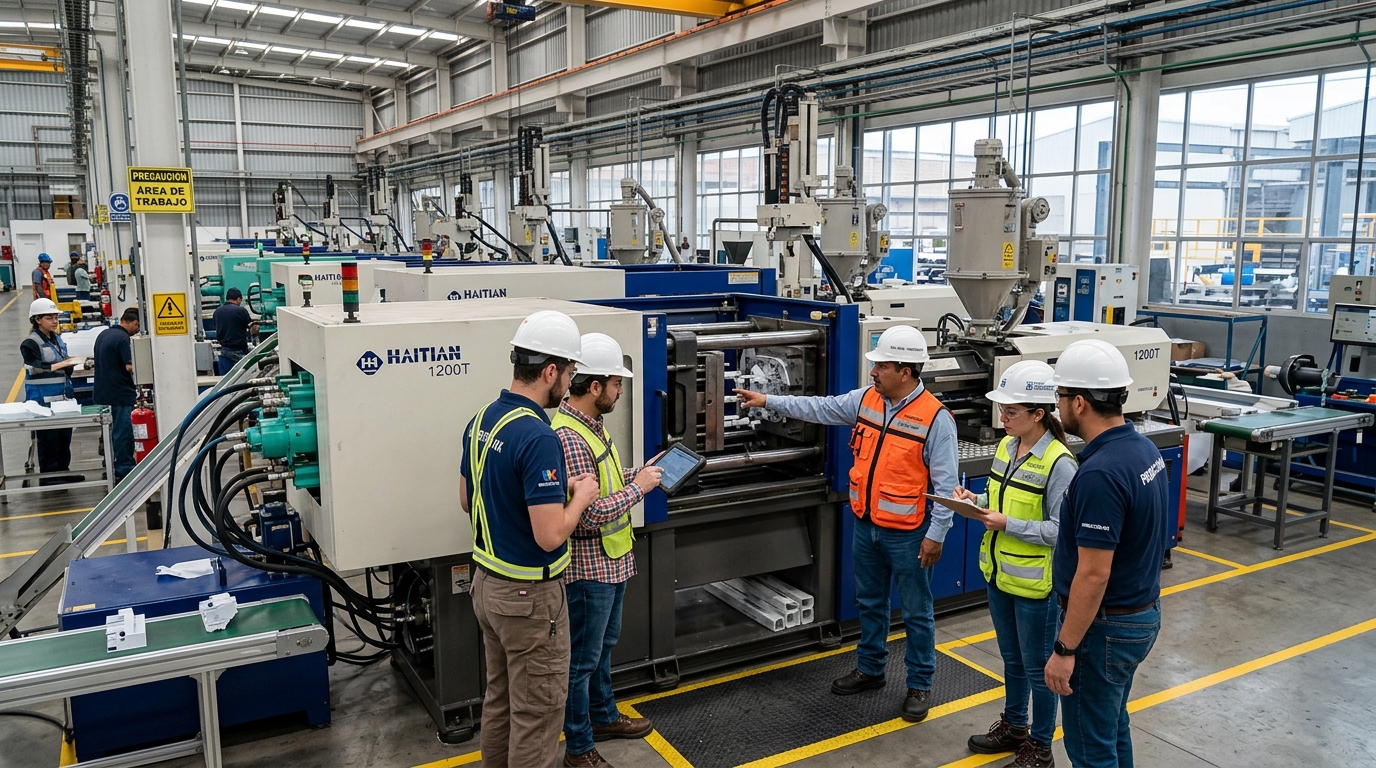
There is no substitute for walking the floor. Document:
- Housekeeping and 5S discipline
- Material flow and WIP staging
- Tooling storage conditions (critical for transferred tools)
- Quality lab equipment and calibration records
- Maintenance logs on key machines
If you can't visit in person, a verified third-party audit with live video is the minimum acceptable substitute. Photos sent by the supplier are not diligence.
Step 9: Reference and Customer Verification
Talk to two existing US customers and one Mexican customer if possible. Ask about on-time delivery rates, response to quality issues, behavior during disputes, and — critically — what happened during the last peso devaluation or input cost shock. A supplier's behavior under stress tells you more than their behavior in a sales meeting.
Step 10: Logistics and Cross-Border Operations
Verify:
- Customs broker relationships on both sides of the border
- Experience with your preferred crossing (Laredo, El Paso, Otay Mesa, etc.)
- IMMEX/Maquiladora program status if applicable
- C-TPAT certification for trusted shipper status
- Typical lead time from PO to delivered DDP at your US DC
A great factory with a weak broker will still cause border delays that wreck your inventory plan.
Step 11: Tooling Transfer and IP Protection
If you're moving tooling from China or the US, the supplier needs documented protocols for:
- Tool intake inspection
- Tool ownership documentation
- IP protection (NDAs enforceable under Mexican law, not just US law)
- Tool maintenance schedules and damage reporting
- Return of tooling if the relationship ends
This is one of the highest-friction steps in any reshoring program, and we coordinate it for clients as part of our reshoring services.
Step 12: Risk Scoring and Decision
Roll everything up into a weighted scorecard. We recommend weighting financial health and USMCA readiness more heavily than most templates do — those are the two dimensions that quietly kill programs after launch. For a fast first pass, our 5-minute supplier risk scorecard gives you a view across financial, quality, and operational dimensions.
Red Flags That Should Stop the Process
A few signals should end the qualification immediately, regardless of how good the rest looks:
- Refusal to share financial statements or bank references
- Inability to produce a USMCA certificate of origin for a comparable existing customer
- Tooling rooms with undocumented customer tools (your tool will be the next undocumented one)
- Customer concentration above 50% on a single buyer
- Unresolved labor disputes or demandas laborales in the company's record
- Quoted prices that move more than 10% between RFQ and PO without a clear input cost basis
We've cataloged the full set in our guide to spotting warning signs when sourcing from Mexico.
How Long This Should Take
A complete qualification, run properly, takes 4–8 weeks. Compressing it below three weeks is where buyers get hurt. The single biggest accelerator is starting with a pre-vetted pool — our AI sourcing engine filters Mexican manufacturers against your specific RFQ requirements, certifications, and financial health thresholds before you spend a minute on diligence.
Where This Fits in a Reshoring Program
Supplier qualification is one workstream inside a larger reshoring decision. If you're evaluating whether to move production from China at all, the strategic question comes first — see our breakdown of China+1 vs. Full Reshoring and our 2026 China-to-US Transition Guide for the broader frame.
For US importers running this framework for the first time, the biggest unlock is treating financial qualification as equal in weight to operational qualification. The Mexican manufacturing ecosystem has world-class factories. It also has factories that will ship beautifully for six months and then stall when their working capital tightens. The framework above is designed to tell them apart before you commit tooling.
Frequently Asked Questions
Q: How much does it cost to qualify a Mexican supplier?
A thorough qualification — including on-site audit, financial diligence, and USMCA documentation review — typically runs $3,000–$15,000 per supplier depending on industry complexity and whether you use internal staff or third-party auditors. The cost of skipping it, in stalled tooling and failed POs, is almost always higher.
Q: What's the difference between ISO 9001 and IATF 16949 for a Mexican supplier?
ISO 9001 is a general quality management standard applicable to any industry. IATF 16949 is the automotive-specific extension that adds requirements around APQP, PPAP, FMEA, and production part approval. If you're sourcing automotive components, IATF 16949 is effectively mandatory; if you're sourcing general industrial parts, ISO 9001 is usually sufficient.
Q: Can I qualify a Mexican supplier remotely without an on-site visit?
You can do most of the framework remotely, but the on-site audit (Step 8) should not be skipped. If travel isn't feasible, hire a Mexico-based third-party auditor to conduct a live video walkthrough — that is the floor of acceptable diligence. Photo packages sent by the supplier are sales material, not audit evidence.
Q: How does Reshore qualify Mexican manufacturers on its platform?
We at Reshore run a continuous qualification process that combines AI-driven screening of operational and financial signals with on-the-ground audits in major Mexican industrial clusters. Manufacturers on our platform are pre-vetted against capability, certifications, USMCA readiness, and financial health before any buyer engagement begins, which compresses typical qualification timelines from months to weeks.
Q: What financial documents should I request from a Mexican manufacturer?
At a minimum: two years of audited financial statements (estados financieros), bank reference letters, a recent Buró de Crédito report with their consent, customer concentration data, and their working capital cycle metrics. For larger programs, also request information on existing trade finance facilities, since those affect their capacity to fund your POs.
Q: How do I verify a Mexican supplier's USMCA compliance before placing an order?
Ask for a sample Certificate of Origin from an existing customer (with sensitive details redacted), request a walkthrough of their regional value content calculation methodology, and verify they can document input origins for the specific HTS codes you'll be importing. If they can't produce a CO they've issued before, assume they can't produce one for you either.
Q: Does Reshore help with tooling transfer from China to Mexico?
Yes — tooling transfer is one of the core services in our reshoring offering. We coordinate decommissioning at the originating factory, international logistics, customs and IMMEX processing, intake inspection at the receiving Mexican factory, and first-article qualification, so the tool moves without becoming an undocumented asset on someone else's floor.
Q: What's the biggest mistake buyers make when vetting Mexican suppliers?
Treating financial qualification as optional. Most buyers run a strong operational and quality audit, then discover months later that the supplier can't fund raw materials for the next PO because peso costs moved or a larger customer stretched their payment terms. Financial diligence belongs in the same tier as quality system audits, not as a downstream concern.