
Reshoring vs. Nearshoring vs. Friendshoring: Which Strategy Wins?
May 18, 2026
Reshoring vs. Nearshoring vs. Friendshoring: Which Strategy Wins?
For the better part of three decades, the question "where should we manufacture this?" had a default answer: China. That default has collapsed. Tariffs, pandemic-era logistics shocks, geopolitical tension, and the rising cost of Chinese labor have forced US companies to rebuild their sourcing strategies from first principles — and three competing approaches have emerged as the leading alternatives.
Reshoring, nearshoring, and friendshoring each promise to reduce dependence on China, but they solve different problems, carry different costs, and suit different products. Choosing among them is one of the most consequential decisions a CFO or chief procurement officer will make this decade. This guide breaks down what each strategy actually means, where each one wins, and how to think about the working capital and execution realities behind the boardroom slide.
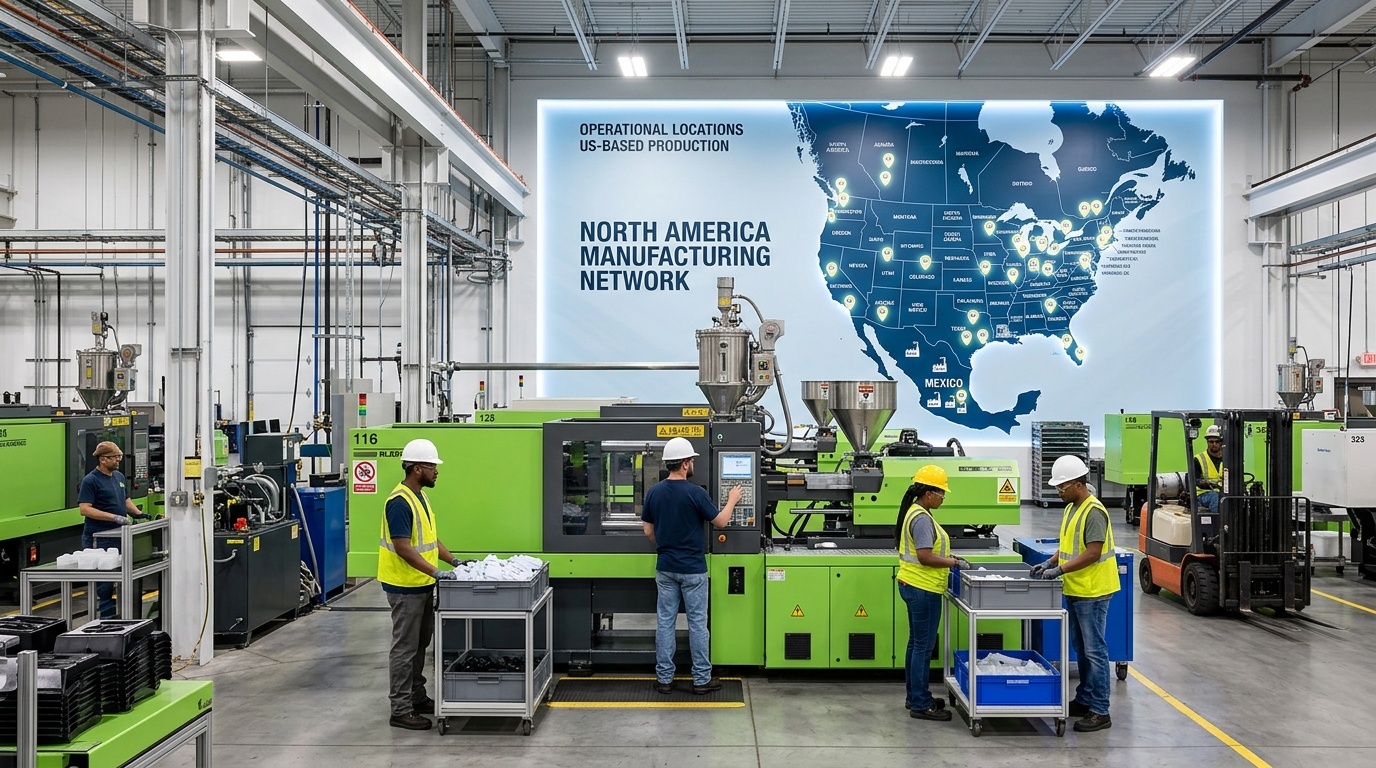
Defining the Three Strategies
Before comparing them, it's worth being precise. These terms get used loosely in trade press, and the distinctions matter when you're modeling landed cost or signing a multi-year supply agreement.
Reshoring
Reshoring is the relocation of manufacturing operations back to the country where the products are sold — for our purposes, back to the United States. It can mean opening a US plant, contracting with a domestic manufacturer, or shifting an existing offshore line to a US facility. Reshoring delivers the shortest supply chains, the strongest IP protection, and the cleanest "Made in USA" story, but it carries the highest labor costs and the longest setup timelines for certain product categories.
Nearshoring
Nearshoring moves production to a country geographically close to the end market. For US companies, that almost always means Mexico — though Canada, Central America, and the Caribbean play smaller roles. Mexico has emerged as the dominant nearshoring destination thanks to the USMCA trade agreement, competitive labor rates, mature industrial clusters in Monterrey, Querétaro, and Tijuana, and overland freight that beats Pacific transit times by weeks.
Friendshoring
Friendshoring (sometimes called "ally-shoring") relocates production to politically aligned countries — typically Vietnam, India, Thailand, Malaysia, the Philippines, or Eastern European nations. The term was popularized by former US Treasury Secretary Janet Yellen in 2022 as a way to reduce strategic dependency on geopolitical rivals without giving up the low-cost advantages of offshore production. Friendshoring keeps production offshore but routes it through trusted trade partners.
Head-to-Head Comparison
| Dimension | Reshoring (US) | Nearshoring (Mexico) | Friendshoring (Vietnam/India) |
|---|---|---|---|
| Average labor cost (fully loaded) | $25–$45/hour | $5–$10/hour | $3–$6/hour |
| Transit time to US Midwest | 2–5 days | 3–7 days (truck) | 30–45 days (ocean) |
| Tariff exposure | None | 0% under USMCA (qualifying goods) | Variable; subject to Section 301 reviews |
| Setup timeline | 6–18 months | 4–9 months | 9–18 months |
| IP protection | Strongest | Strong | Variable by country |
| Inventory carrying cost | Lowest | Low | High (long lead times) |
| Best for | High-automation, regulated, low-labor-content products | Mid-complexity assembly, plastics, automotive, appliances | Labor-intensive consumer goods, textiles, electronics |
Where Each Strategy Wins
When Reshoring Is the Right Call
Reshoring makes the strongest economic case when labor is a small share of total product cost. If your bill of materials is 70% material and 10% labor, the wage gap between Ohio and Guangdong matters far less than freight, tariffs, and inventory carrying costs. Highly automated injection molding, CNC machining, and metal stamping operations often pencil out for full reshoring — especially when you factor in tooling proximity, faster engineering iterations, and the ability to run small batches without 40-day lead times.
Reshoring also wins for products subject to FDA, DoD, or other regulatory regimes where domestic production simplifies compliance, and for brands whose value proposition depends on a Made in USA label.
When Nearshoring Is the Right Call
Nearshoring to Mexico has become the default answer for the broad middle of US manufacturing — products that are too labor-intensive to economically build in the US but too time-sensitive or tariff-exposed to keep in Asia. The combination of USMCA duty-free treatment, overland freight, and a Mexican manufacturing base that has matured dramatically over the past decade makes it hard to beat for:
- Plastic injection molding and finished plastic goods
- Automotive components and subassemblies
- White goods and appliances
- Medical devices and electromechanical assemblies
- Furniture and consumer durables
The case studies we've published — including a mid-market OEM cutting lead times 62% by nearshoring to Monterrey and a distributor reshoring 40% of its SKUs in 18 months — both followed the same pattern: products with meaningful labor content, freight sensitivity, and the need for tighter engineering feedback loops than a Pacific supply chain allows.
When Friendshoring Still Wins
Friendshoring remains the right answer for genuinely labor-intensive categories where even Mexican wages are too high. Apparel, footwear, certain consumer electronics assembly, and toys are still mostly built in Vietnam, India, Bangladesh, and similar markets — and likely will be for the foreseeable future. Companies pursuing a China+1 strategy often combine friendshoring (for the cost-driven SKUs) with nearshoring or reshoring (for the time-sensitive ones), creating a portfolio rather than picking a single winner.
The Hidden Variable: Working Capital
Most comparisons stop at landed cost. That's a mistake. The financial mechanics of each strategy differ enormously, and they show up on the balance sheet long before they show up in the P&L.
- Reshoring typically demands the highest upfront capital — tooling transfer, facility setup, hiring — but unlocks the lowest ongoing working capital needs because inventory in transit drops to near zero.
- Nearshoring sits in the middle. Setup costs are real but modest, and the 3–7 day truck transit from Monterrey or Saltillo means you can run on 2–3 weeks of buffer stock instead of 8–12.
- Friendshoring keeps offshore working capital pain intact. You're still financing 30–45 days of ocean freight plus 60–90 day supplier terms, and you're doing it in a country where US factoring and trade finance options are thinner than they are along the US-Mexico corridor.
This is why we often tell CFOs that the reshoring vs. nearshoring decision is, in part, a working capital decision. A 32% landed-cost saving from Mexico means very different things depending on whether the supplier accepts Net 60 dollar invoices or demands deposits in pesos.
Which Strategy Wins?
The honest answer: it depends on the SKU, and most mature manufacturers will end up with a portfolio — not a single strategy.
A useful framework:
- Start with labor intensity. If labor is more than 25% of COGS, friendshoring or nearshoring will likely beat reshoring on direct cost.
- Layer in time-to-shelf sensitivity. Fast-moving categories or products with frequent design changes push you toward nearshoring or reshoring regardless of labor.
- Model tariff and FX exposure. USMCA-qualifying goods from Mexico carry structural advantages that compound over a multi-year contract.
- Stress-test working capital. A program that requires 90 days of in-transit inventory ties up cash that could fund growth elsewhere.
- Account for execution risk. Reshoring and nearshoring projects fail most often on the boring stuff — tooling transfer schedules, qualifying second-source suppliers, validating Mexican factories on financial as well as operational dimensions.
For the majority of US manufacturers we work with — particularly in plastics and injection molding — nearshoring to Mexico is winning the most decisions right now, with selective reshoring of high-automation or strategically sensitive lines. Friendshoring continues to play a role but increasingly as a hedge rather than a default.
Making the Move
Choosing a strategy is the easy part. Executing it — transferring tooling without disrupting production, qualifying factories that meet your quality and financial standards, navigating USMCA documentation, building a logistics and customs flow that actually works — is where most programs stall.
At Reshore, we coordinate the full sequence: tooling transfer from China, factory sourcing across our vetted Mexico and US network, supplier matching tuned to your product specs and volumes, and the logistics setup to get production live in record time. Our focus on plastic manufacturing and injection molding means we've seen most of the failure modes already, and we've built our AI-powered platform to avoid them.
Whether you're modeling your first nearshoring program, evaluating full reshoring for a strategic SKU, or building a portfolio that spans all three strategies, the next step is usually a structured assessment of which products move where and in what order.
Frequently Asked Questions
Q: What is the main difference between nearshoring and friendshoring?
Nearshoring is defined by geography — moving production to a country physically close to the end market, which for US companies means Mexico, Canada, or Central America. Friendshoring is defined by geopolitics — moving production to politically aligned countries regardless of distance, which often means Vietnam, India, or Eastern Europe. A factory in Mexico is both nearshore and friendshore; a factory in Vietnam is friendshore but not nearshore.
Q: Is reshoring more expensive than nearshoring?
Almost always on direct labor, yes — US wages run roughly 3–5x Mexican wages for comparable manufacturing roles. But total cost of ownership often tells a different story. For highly automated products with low labor content, reshoring can match or beat nearshoring once you account for freight, tariffs, inventory carrying costs, and the value of faster engineering cycles. A proper TCO analysis is the only way to know which one wins for a specific SKU.
Q: How long does a typical nearshoring project take?
For a single product line moving from China to Mexico, expect 4–9 months from decision to first production shipment, depending on tooling complexity, supplier qualification, and the regulatory environment of your product. Multi-SKU programs or projects requiring new tooling can run longer. The biggest schedule risk is usually tooling transfer and validation, not factory selection.
Q: Does USMCA actually save money compared to importing from Asia?
For qualifying goods, yes — USMCA provides duty-free treatment for products meeting rules-of-origin requirements, which can mean tariff savings of 5–25% depending on the HTS code compared to Section 301-affected Chinese imports. The catch is that you have to document compliance properly, including regional value content calculations. Companies that treat USMCA as automatic rather than as a documentation discipline sometimes lose the benefit at the border.
Q: How does Reshore help companies choose between reshoring and nearshoring?
We start with a structured assessment of your current tooling, product specifications, volumes, and cost structure, then model the landed cost and operational tradeoffs of US versus Mexico production for each SKU. Our platform matches qualifying products to vetted manufacturers in our Americas-based network and coordinates tooling transfer, factory onboarding, and production ramp. The output isn't a recommendation in the abstract — it's a sequenced plan with named suppliers, timelines, and cost models.
Q: Can a company pursue more than one strategy at once?
Yes, and most mature manufacturers eventually do. A typical portfolio might reshore one or two strategic SKUs to the US for IP or regulatory reasons, nearshore the bulk of mid-complexity production to Mexico for cost and lead-time balance, and keep selected labor-intensive items in Vietnam or India under a friendshoring or China+1 framework. The strategic question isn't "which one?" but "which mix, in what sequence, over what timeline?"
Q: What are the biggest risks of nearshoring to Mexico?
The most common failure modes are inadequate supplier due diligence (operational capability looks good on paper but the factory can't actually hit your tolerances at volume), USMCA compliance gaps that surface at customs, FX and working capital mismatches between dollar-denominated invoices and peso-denominated costs, and underestimating the project management overhead of running production 1,500 miles from your engineering team. Each is manageable, but only if you plan for it before signing the supplier agreement.
Q: Is friendshoring still a viable strategy in 2026?
Yes, particularly for labor-intensive categories where Mexican wages still can't compete with Vietnam, India, or Bangladesh. What's changed is that friendshoring is rarely the whole answer anymore — it's typically one leg of a diversified strategy that also includes nearshoring or reshoring for time-sensitive or tariff-exposed SKUs. Companies that doubled down on a single friendshore country after leaving China have, in several cases, found themselves exposed to new concentration risks.