
Reshoring Strategy & US Supply Chain Realignment
May 18, 2026
Reshoring Strategy & US Supply Chain Realignment
For two decades, US supply chain strategy was a single conversation: how to get more landed-cost out of Asia. That conversation is over. The new one — driven by tariffs, geopolitical risk, freight volatility, USMCA preference, and a working-capital environment that punishes long lead times — is about realignment. Where production sits, who finances it, and how fast you can move it.
This guide lays out how US companies are rebuilding their supplier base across North America, the financial and operational mechanics that determine whether a reshoring program ships profitably, and the strategic frameworks executives are using to make capital allocation decisions in the current environment.
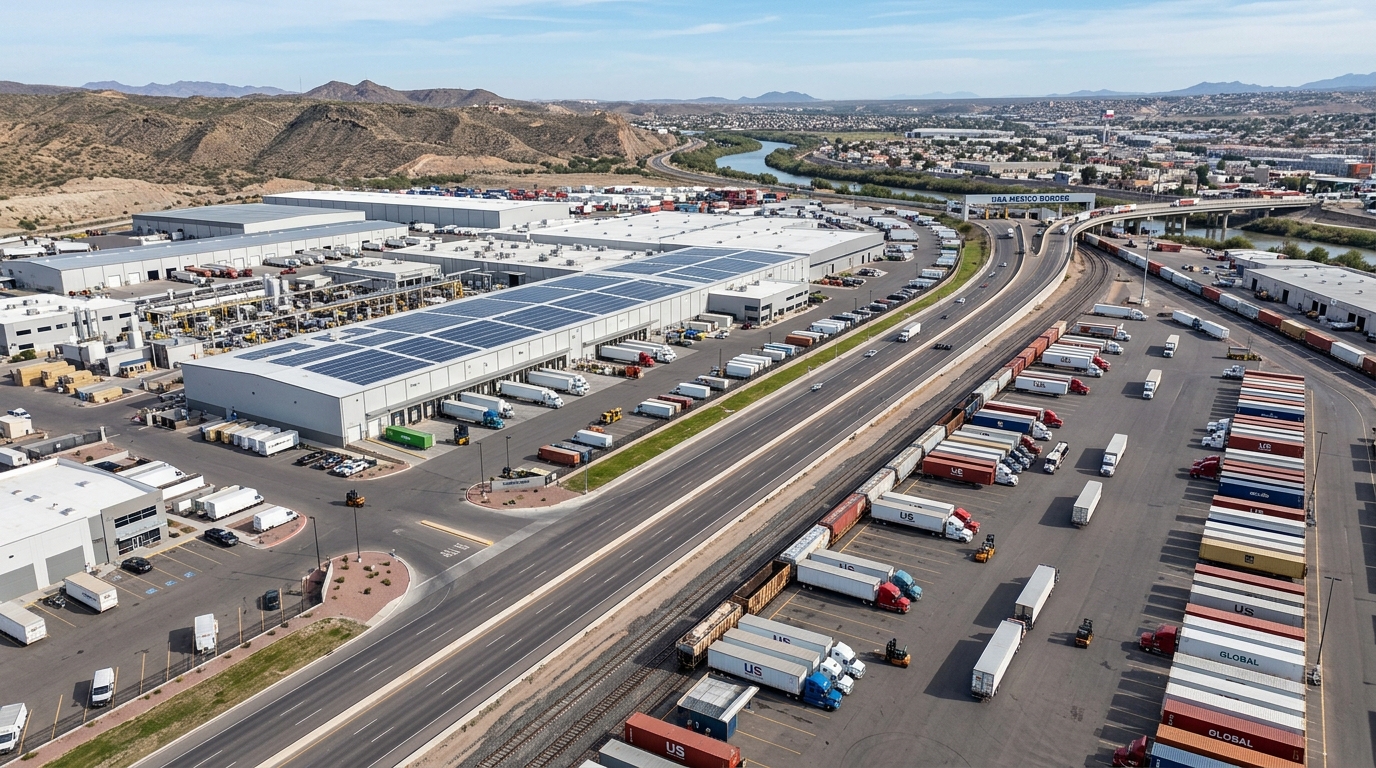
Why Supply Chain Realignment Is Now a Board-Level Topic
Reshoring is no longer a hedge or a public-relations posture. According to the Reshoring Initiative's 2024 Data Report, reshoring and FDI job announcements have remained above 280,000 annually since 2022 — a structural break from the 2010s baseline. The drivers stack:
- Tariff exposure on China-origin goods, including Section 301 increases that took effect across 2024 and 2025
- USMCA preference, which makes Mexican and US-origin inputs duty-advantaged for North American end markets
- Freight and lead-time volatility from Red Sea disruptions, Panama Canal drought cycles, and trans-Pacific capacity swings
- Customer mandates — Tier-1 buyers (automotive, medical, defense, retail) increasingly require regional or USMCA-compliant sourcing
- Working-capital cost — at current US interest rates, every additional 30 days of inventory in transit shows up directly on the P&L
The CFO question has shifted from "what's the unit cost in Shenzhen?" to "what's the total cost of capital tied up in an 8,000-mile supply chain, and how much margin does that erode versus a 2-day truck from Monterrey?" The latest reshoring jobs and investment data shows how dramatically this calculus has reshaped capital allocation across industries.
The Three Strategies: Reshoring, Nearshoring, Friendshoring
Most executives use these terms interchangeably. They shouldn't. Each implies a different operating model, capital profile, and risk surface.
| Strategy | Definition | Typical Use Case | Capital Intensity |
|---|---|---|---|
| Reshoring | Bringing production back to the US | High-IP, automation-friendly, defense/medical-regulated | High (capex, labor) |
| Nearshoring | Relocating to Mexico or Central America | Labor-intensive assembly, plastics, electronics, appliances | Medium |
| Friendshoring | Sourcing from allied nations (Vietnam, India, Eastern Europe) | Categories where North America lacks capacity | Low–Medium |
| China+1 | Keeping China while adding a second source | Risk mitigation without full migration | Low |
Most realistic programs are hybrids. A US appliance brand might reshore the high-value electronics module, nearshore plastic enclosures to Mexico, and keep certain commoditized inputs in China under a China+1 structure. The strategy isn't binary — it's a portfolio decision. For a deeper side-by-side comparison, see our breakdown of which sourcing strategy fits which product profile.
We at Reshore see the vast majority of plastics and injection molding programs land in the nearshoring bucket, specifically Mexico. The reason is simple economics: tooling is portable, labor cost differential to the US remains meaningful, and USMCA gives finished goods duty-free entry into the US. The trip from Monterrey or Querétaro to Dallas is two days by truck.
What Drives the Reshore vs. Nearshore Decision
Five variables determine the answer for any given SKU or program:
1. Labor Content
Products with high direct-labor content (manual assembly, finishing, packaging) favor Mexico. Highly automated processes — where labor is 5% or less of COGS — can land in the US without margin destruction.
2. Logistics-to-Value Ratio
Bulky, low-value-density goods (furniture, large enclosures, certain housewares) suffer disproportionately from ocean freight. These are the strongest nearshoring candidates because trucking from Mexico is cheap relative to TEU rates and far more predictable.
3. IP and Regulatory Posture
Defense (ITAR), medical (FDA Class II/III with rapid iteration), and certain electronics programs increasingly require US production for compliance or customer-mandate reasons.
4. Tooling Portability
Injection-mold tooling, stamping dies, and most metalworking fixtures can be physically moved. The Reshore platform was built largely around this fact — once tooling moves, the supply base can be rebuilt around it in Mexico or the US in months, not years.
5. Working-Capital Profile
This is the most under-analyzed variable. A program that shortens cash-conversion cycle by 60 days (by eliminating ocean transit and reducing safety stock) can fund a meaningful portion of its own relocation cost through working-capital release. CFOs running this math — often with a financial impact model that compares scenarios before committing capital — are the ones who approve programs fastest.
The Realignment Playbook: A Six-Phase Framework
A serious supply chain realignment isn't a single procurement decision. It's a multi-quarter program. Here's the framework we use with clients — and a more detailed end-to-end playbook for US manufacturers is available for teams that want to go deeper on each phase.
Phase 1: Portfolio Triage (Weeks 1–4)
Segment SKUs by reshoring suitability. Use a scoring model across labor content, tooling complexity, volume, margin, and customer requirements. Most portfolios reveal that 20–40% of SKUs are strong nearshoring candidates that drive 60–80% of the strategic value. We've documented how one distributor moved 40% of SKUs in 18 months using exactly this triage approach.
Phase 2: Total Landed Cost Modeling (Weeks 3–8)
Build a unit-economics model that includes tariff, freight, duty, inventory carrying cost, quality cost, and working-capital cost — not just FOB price. This is where most "China is cheaper" assumptions break down.
Phase 3: Supplier Qualification (Weeks 6–16)
Identify and qualify Mexican or US manufacturers on operational, quality, and financial dimensions. The financial dimension is the one most procurement teams skip — a factory that can't fund raw materials for your PO will create the same disruption a missed container would. Qualify suppliers on balance sheet strength, banking relationships, and willingness to participate in supply chain finance programs.
Phase 4: Financing Structure (Weeks 8–16, parallel)
This is where strategy meets capital. Reshoring deals typically use one or more of: letters of credit (familiar but slow), supply chain finance / reverse factoring (lets buyers extend terms while suppliers get paid early), PO financing (covers the supplier's raw-materials gap), or dynamic discounting. The right structure depends on buyer balance sheet, supplier maturity, and program scale.
Phase 5: Tooling Transfer & Production Validation (Months 4–9)
Physical relocation of molds and dies, first-article approvals, PPAP if automotive, regulatory revalidation if applicable. This is the riskiest operational phase — tooling damage in transit and validation delays are the two most common timeline slips. Our step-by-step transition guide for moving production out of China covers the logistics of this phase in detail.
Phase 6: Ramp and Dual-Source Run-Out (Months 6–18)
Most programs run the new source in parallel with the legacy source for 3–6 months before fully switching. This is expensive but de-risks the cutover.
Working Capital: The Hidden Lever in Realignment Deals
The financial mechanics of cross-border manufacturing deserve more attention than they typically get in the boardroom.
When a US buyer issues a PO to a Mexican factory, there's a cash flow gap. The factory needs to buy resin, run production, ship, and clear customs — often 45 to 90 days of work — before the buyer's Net 30 or Net 60 invoice clock even starts. In China, this gap was historically absorbed by mature trade finance ecosystems and supplier balance sheets built up over decades. In Mexico's emerging industrial clusters, that capital infrastructure is still being built.
This is why supply chain finance structures matter so much in nearshoring programs. The most common configurations:
- Reverse factoring — the buyer's bank or a third-party platform pays the supplier early at a discount tied to the buyer's credit rating, and the buyer pays the platform on extended terms. The supplier gets cash, the buyer gets terms, and the cost is usually lower than what the supplier could access on its own.
- PO financing — a lender advances funds against a confirmed PO so the supplier can purchase raw materials. Useful for smaller Mexican manufacturers without strong banking relationships.
- Invoice factoring — the supplier sells its receivable for immediate cash. Simpler but typically more expensive than reverse factoring.
- Dynamic discounting — the buyer offers early payment in exchange for a sliding-scale discount, funded off its own balance sheet.
The CFO framework is straightforward: financing structure should be chosen based on (1) which party has the cheaper cost of capital, (2) how strategic the supplier relationship is, and (3) whether the buyer wants the obligation on or off the balance sheet. For finance teams new to this terrain, our reshoring TCO question bank for finance leaders addresses the most common modeling questions in detail.
What Realignment Demands of the CFO and CPO Functions
Procurement and finance organizations that grew up on offshore sourcing have to retool for this environment:
CPOs need to qualify suppliers on financial fitness, not just operational capability. A beautifully run factory that's three months from a liquidity crunch is a worse partner than a less polished factory with stable banking.
CFOs need to internalize working-capital math at the SKU level. Cost-of-capital used to be a footnote in sourcing decisions. At current rates and at the cycle times typical of ocean freight, it's often the deciding variable.
Treasury needs to integrate with procurement earlier in the supplier-selection process. The supply chain finance structure shouldn't be bolted on after the PO is signed; it should be designed into the sourcing decision.
Common Mistakes in Realignment Programs
The most expensive mistakes we see — explored in more depth in our roundup of pitfalls that derail reshoring projects:
- Treating it as a single sourcing decision rather than a multi-year capital program
- Ignoring tooling condition at the legacy supplier — molds that have run 5 million cycles often need refurbishment before they'll qualify at a new factory
- Under-budgeting validation timelines for regulated products
- Choosing suppliers on quoted unit price without diligencing financial stability
- Failing to lock in financing structure before issuing the first production PO, which leaves the supplier scrambling for working capital
The Strategic Window
The companies that move now have a structural advantage. Mexican industrial capacity in plastics, electronics assembly, and metalworking is filling fast — the best factories in Monterrey, Saltillo, Querétaro, and Guadalajara are running with limited new-program slots. Tooling transfer logistics are constrained. Supply chain finance providers are being selective about which programs they fund as the space matures.
The realignment window won't close, but it will get more crowded and more expensive. Programs initiated in the next 12–18 months will land in a more competitive supplier market by 2027.
Frequently Asked Questions
Q: How long does a typical reshoring program take from decision to first production?
For plastics and injection molding programs, six to twelve months is a realistic range from go-decision to first qualified production parts. Tooling transfer accounts for roughly two to three months of that, supplier qualification another two to three, and validation and ramp the remainder. Regulated products (automotive PPAP, medical, defense) can extend this by another three to six months.
Q: What's the difference between China+1 and full reshoring?
China+1 means keeping your existing China supply base while adding a second source — usually in Mexico, Vietnam, or India — to mitigate concentration risk. Full reshoring means migrating the entire program out of China. China+1 is faster and cheaper to execute; full reshoring delivers larger tariff savings and shorter cash-conversion cycles but requires meaningfully more capital and execution discipline.
Q: Is reshoring to the US always more expensive than nearshoring to Mexico?
For labor-intensive products, almost always yes — Mexican direct labor remains a fraction of US labor cost. For highly automated production where labor is under 5% of COGS, the gap narrows substantially and US production can be competitive, especially when you account for logistics, tariff, and inventory carrying cost. The decision is product-specific.
Q: How does Reshore approach tooling transfer from China?
We coordinate the full tooling transfer process — assessment of current tool condition at the China factory, refurbishment scoping, physical logistics, customs clearance, and re-qualification at the receiving Mexican or US factory. Because tooling transfer is the highest-risk single step in most reshoring programs, we manage it as a standalone workstream with explicit milestones rather than rolling it into general sourcing.
Q: What financing structures work best for cross-border manufacturing deals?
For most US buyer / Mexican supplier relationships, reverse factoring tends to be the most efficient structure — it leverages the US buyer's typically stronger credit rating to give the supplier cheap early payment while letting the buyer extend its own terms. PO financing works better for smaller suppliers without established banking relationships, and letters of credit remain common for first-time relationships where neither party has built up trust yet.
Q: What types of products are best suited for nearshoring to Mexico?
Plastic injection-molded parts, electronics assembly, appliances, automotive components, furniture, and medical devices have all migrated successfully to Mexico in volume. The common thread is meaningful labor content, portable tooling, and proximity-value (bulky goods, fast-cycle programs, or products with frequent design iterations where short lead time matters).
Q: Does Reshore work with manufacturers outside of plastics and injection molding?
Plastics and injection molding is our deepest specialization, but the platform and methodology extend to adjacent categories — metal stamping, light assembly, electronics, and packaging — particularly where they're co-located with plastics programs. We're most effective on programs where tooling transfer and supplier matching are the core challenges.
Q: How do I know if my company is ready to start a reshoring assessment?
The minimum threshold is usually: a defined product or program with stable demand, identifiable tooling that you own or can access, and an executive sponsor (typically CFO or CPO) authorized to evaluate total landed cost rather than just unit price. If those three are in place, a reshoring assessment can give you a defensible answer within weeks on whether the program economics work.